
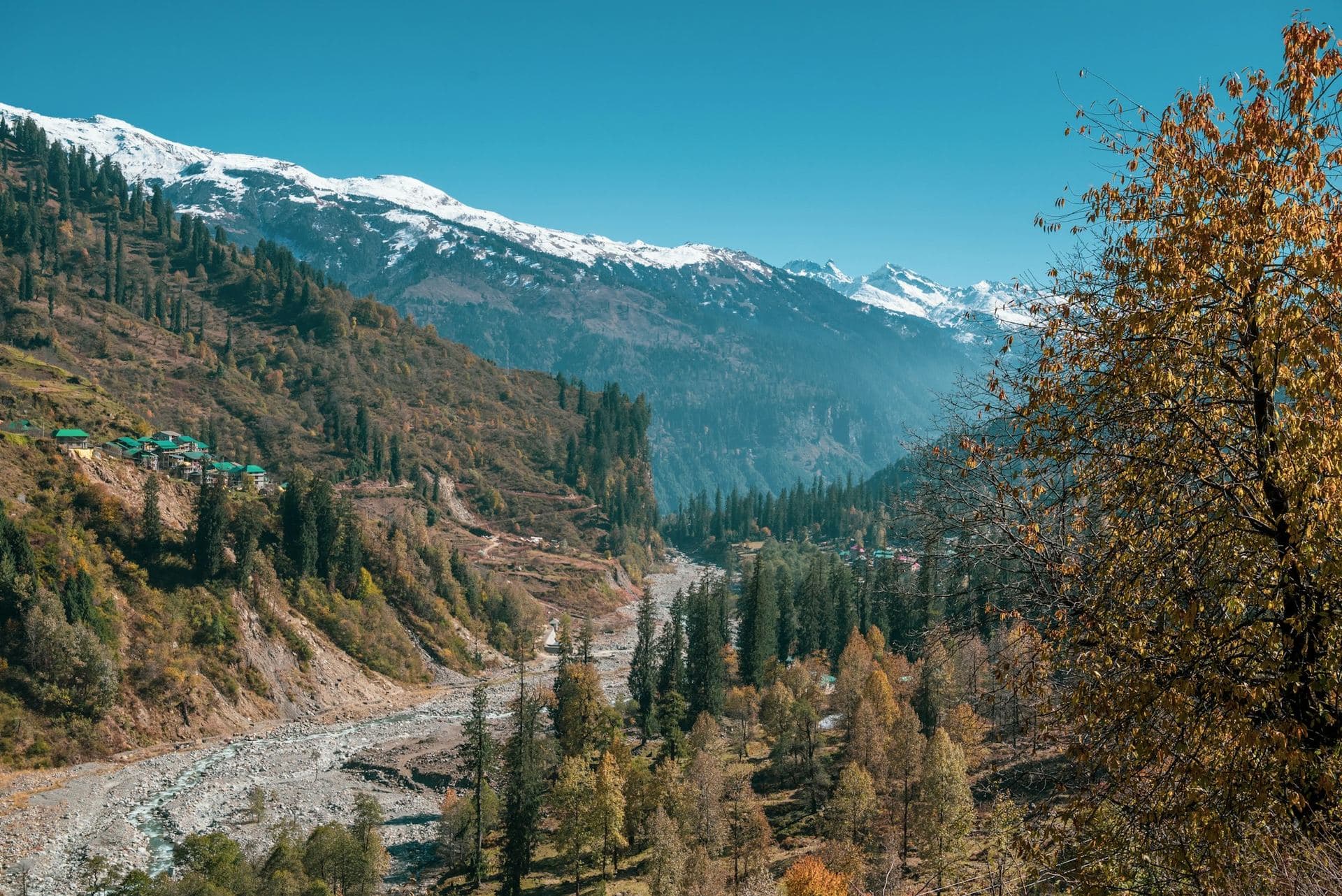
The Farm-to-Table Kitchen
At a Persimmon Farmstead stay, farm-to-table means home-style Himachali food cooked in our small family kitchen from what the orchard and local mandi give us that week — dham-inspired thalis, siddu, orchard chutneys, dishes guests message us for by name. Tell us what you love and we cook to order.
When people write to us after a stay, it is almost never about the room. It is about a plate. "The rajma," someone said last spring, "I still think about the rajma." That is the part of Persimmon we care most about, and it is why we started this place: two of us left desk jobs in 2021 with a half-serious plan to make the food here a thing people in the town actually talk about.
So this page is not a menu and it is not a restaurant review. It is a plain account of what eating at our farmstead is like — where the food comes from, how our small family kitchen works, what to order, and how to ask us for a special dinner. Both our homes, the flagship at Badgran and the orchard house at Shanag, run the same kitchen philosophy, cooked by the same hands and the same recipes.
The short version: you tell us what you love, we cook it fresh, and we eat around the same idea of dinner you would at a Kullu home — seasonal, unhurried, and made for you rather than pulled off a warmer.
Cooked to order, not off a buffet
There is no laminated card and no chafing-dish spread. We ask what you feel like eating, check what's fresh that day, and cook your dinner from scratch. Tell us at breakfast if you want rajma-chawal by evening.
Dham-inspired Himachali thali
Our version of the Kullu valley's festive vegetarian dham — madra, sepu vadi, a slow dal, rice, seasonal sabzi. Not the full ceremonial overnight cook, but the flavours guests come back asking for by name.
Straight from the orchard in season
September–October, the apples and plums on your plate came off our own trees. Chutneys, stewed fruit, apple in the morning — the harvest walks into the kitchen and onto the table the same week.
We eat together, not on a timer
Dinner is one unhurried sitting near the bonfire or in the dining room, hosts included. No fixed dining hours to race against, no upselling — just the meal, the mountains going dark, and conversation.
Farm-to-table here means our kitchen, not a concept
When we say farm-to-table, we don't mean a printed menu with a leaf icon next to it. We mean a small family kitchen off the dining room — two of us and the cook who has been with us since the first winter — and a decision made every morning about what to make from what the orchard, the kitchen garden and the Manali mandi actually gave us that week. Some evenings that's our own plums and apples turning into chutney. In peak apple season, September and October, it's fruit off our own trees. In deep winter it's whatever keeps well and warms you up, because the road to the mandi ices over and you cook from the store cupboard like every mountain household does.
We are honest about the scale of it. This is a home kitchen, not a hotel kitchen with a brigade of chefs and forty dishes on standby. That's the whole point. It is why the food tastes like someone's mother made it, and it is why we ask what you want to eat rather than hand you a card. If you need a wide buffet with live counters, we are not that. If you want a plate of dal, rice, a seasonal sabzi and a rajma cooked slow — sitting close enough to smell the tadka going into the pan — this is exactly that.
The dham-inspired thali guests come back for
The dish people ask about most is our take on a Himachali dham. A traditional dham is a festive vegetarian meal the Kullu valley serves at weddings and temple functions — cooked overnight by botis, the community cooks, and eaten sitting on the floor in a line. We don't pretend to serve a full ceremonial dham on demand; that takes a day and an occasion. What we do is cook the heart of it: madra (chickpeas or vegetables in a slow yoghurt gravy), sepu vadi (lentil dumplings in a spinach curry), a proper dal, rice, and a sweet mittha to close. Ask us a day ahead and we'll build a dham-style thali around whatever the season gives us.
The other name that comes up in guest messages is siddu — a steamed wheat bun, sometimes stuffed with a walnut-poppy paste, eaten with ghee or a green chutney. It is proper cold-weather Himachali comfort food and takes time to prove and steam, so it's a request-ahead dish rather than a whim. Mention it when you arrive and we'll usually manage it for one of your evenings.
A few things worth asking for by name
- The slow rajma-chawal — the dish that shows up most in our messages, best asked for at breakfast so it can cook down all afternoon
- A dham-inspired thali (madra, sepu vadi, dal, rice, mittha) — request a day ahead
- Siddu with ghee and green chutney — cold evenings, needs proving time, so ask early
- Orchard chutneys and stewed apple in season — September–October, from our own trees
- A simple ghar-ka-khana thali if you've been eating out for days and just want home food — this is the one families keep coming back to
Cooking with what the orchard gives us
Both homes sit in working orchard land — the flagship a minute off the highway at Badgran, about 14 km south of Manali; the Shanag house higher up, 4–5 km north toward Old Manali and the snow line. Apples are the obvious crop, but the kitchen garden and the valley give us more than fruit: greens through the warm months, walnuts in autumn, herbs at the door. When the harvest is on, the distance from tree to table is a short walk, and you'll taste it in the chutney at dinner or the apple on your breakfast plate.
Seasons decide the menu more than we do. Summer, May and June, is the easy time — greens, fresh produce, lighter plates you can eat after a day out at Solang or on a village walk. Autumn is apples and richer cooking. Winter narrows things down honestly: fewer ingredients, more from the store, hot food that earns its place next to the bonfire. We'd rather cook a short, good, seasonal meal than a long menu of things trucked in out of season.
We had one guest who asked, half-joking, if he could just have the same dal every night because he'd never had one like it at home. He did. Five nights, same dal. That's the kind of kitchen this is.
— — your hosts at Persimmon
Eating together, and asking for a special dinner
Dinner at Persimmon is one sitting, not a shift. There are no fixed dining hours to race, and we sit down with guests more often than not — that's where the food stories and half the Manali trip advice actually happen. In fair weather it moves out to the bonfire; a plate, a fire, the peaks going dark behind the orchard. It is the same whether you are a couple, a family with restless kids who need feeding early, or a pet parent whose dog is asleep under the table.
If you want to mark something — an anniversary, a birthday, a proposal, or just a meal you'll remember — tell us when you book or over WhatsApp before you arrive. Give us a day's notice and we'll plan a special dinner around it: a dham-style spread, a fire laid, the dishes you named. We can't do everything a full restaurant can, and we won't pretend to. What we can do is cook you one genuinely good, personal meal in a mountain orchard, the way we'd cook for people we know. message any of our numbers and just tell us what you love to eat.
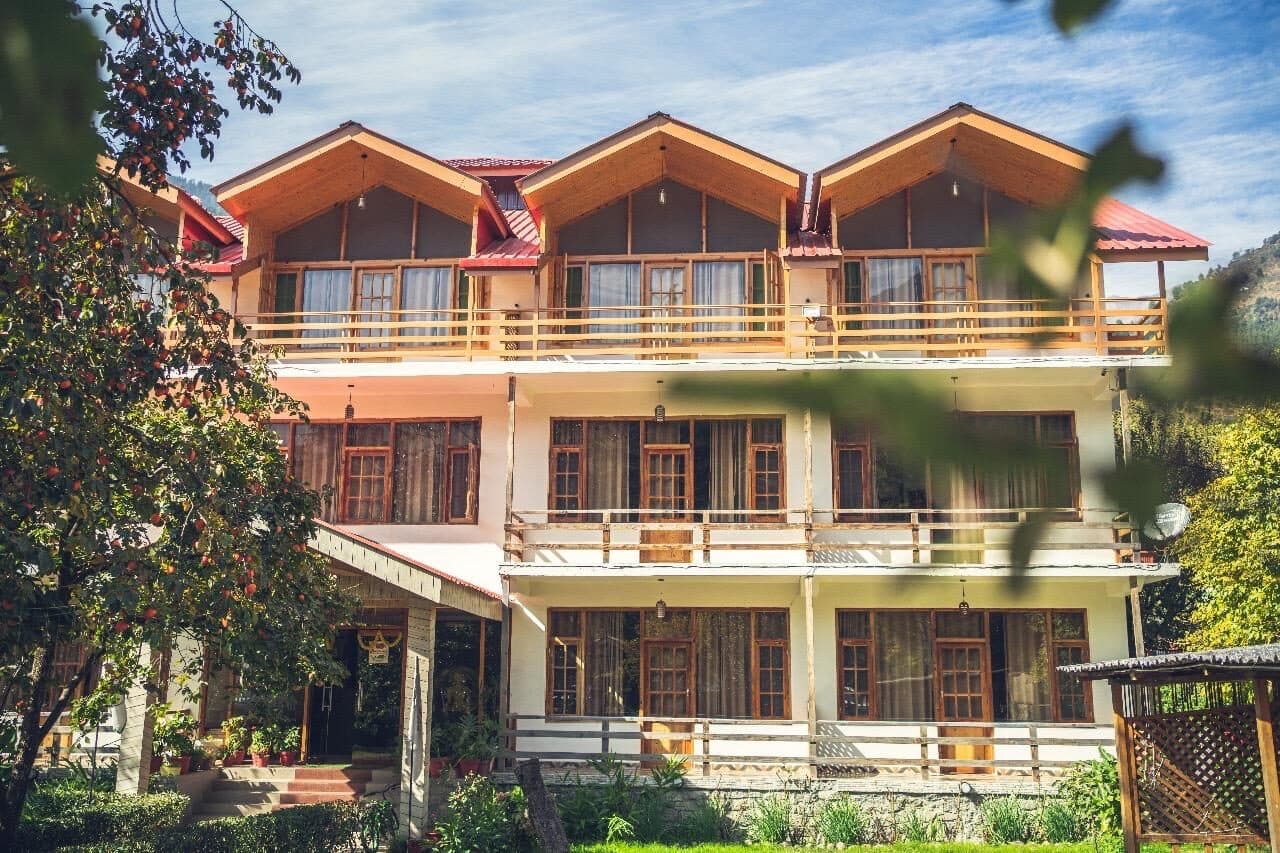 The Farmstead
Persimmon Farmstead
The flagship boutique hotel — orchard rows, a family kitchen, and the morning sun.
Explore this home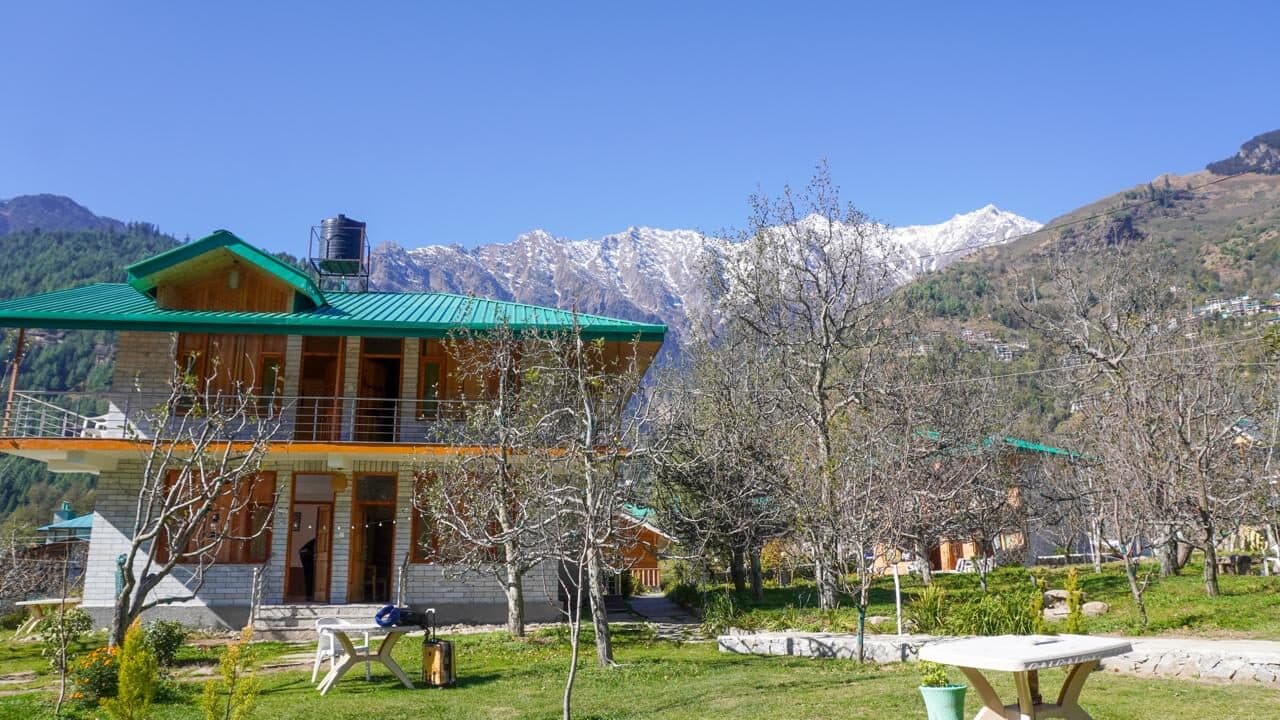 The Shanag House
Persimmon Farmstead Shanag
The high boutique hotel — wooden chalets and stone cottages on open orchard lawns.
Explore this homeGood to know
Is the food at Persimmon Farmstead vegetarian or non-vegetarian?
We cook both. Himachali home food and our dham-inspired thali are largely vegetarian by tradition, but we also make non-veg to order — chicken curries, and at times local trout. Tell us your preference when you book and we'll plan around it. Jain and no-onion-garlic meals are possible with a day's notice.
Can you cook to order or is there a fixed menu?
We cook to order from a small family kitchen — there's no fixed printed menu and no buffet. We ask what you feel like eating, check what's fresh that day, and make it from scratch. For special dishes like siddu or a full dham-style thali, a day's notice helps, since they take time to prepare properly.
Can you handle dietary restrictions and allergies?
Yes, within a home kitchen's limits. We regularly cook for Jain guests, no-onion-garlic diets, and simple kid-friendly food. Tell us about any allergy clearly when you book — because everything is cooked fresh in one small kitchen, we'd rather plan carefully than risk it. We can't guarantee a fully allergen-isolated kitchen the way a large hotel might.
How do I request a special dinner or celebration meal?
Message us on WhatsApp (+91 62306 45166 or +91 99999 75545) before you arrive, ideally a day ahead. Tell us the occasion and the dishes you love — a dham-style thali, a bonfire dinner, something for an anniversary — and we'll set it up. We keep it personal and home-cooked rather than a formal restaurant service.
Tell us your dates. We'll confirm, personally.
You send a request, a real host confirms it by WhatsApp — usually within a few hours.