
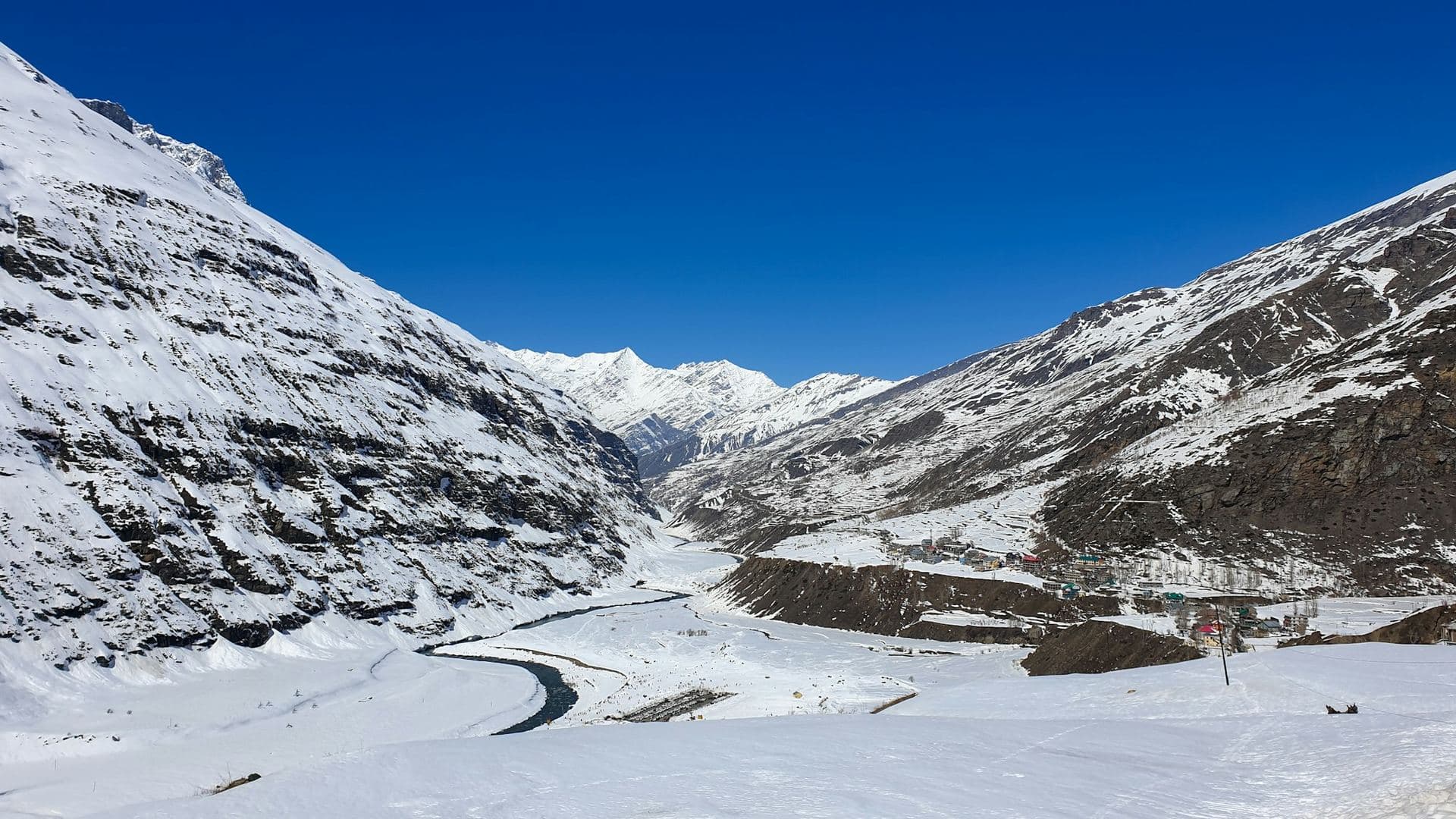
Snow Days at the Farmstead
Snow reaches our two farmstead homes at different times. Higher Shanag (~2,050 m, north of Manali) whitens first and holds it, usually late December through February. Badgran, ~14 km south and lower, catches lighter, shorter snow. From either, you watch it fall from a warm bed, then day-trip to deeper snow at Solang or Sissu.
Every winter we get the same message from guests around Delhi and Chandigarh: "Will there be snow?" The honest answer is that it depends on which of our two homes you pick and which week you come. Snow in the Kullu valley is not one event. It arrives higher and earlier at Shanag, later and lighter down at Badgran, and it can miss a whole fortnight in a mild January before dumping half a metre in a single February night.
What we can promise is the part that makes a snow trip worth it: watching it come down from inside a warm room, hot water still running, the kitchen still cooking, the bonfire lit once it stops. We have done enough winters now to tell you honestly when to come, what the road does, and where to drive for the deep stuff if the snow decides to skip us that week.
This page is what a snow stay actually looks like from a Persimmon bed, not a brochure list of "snow points."
Shanag whitens first
At roughly 2,050 m and 4-5 km north of Manali toward the snow line, our Shanag chalets catch the season's first snow and hold it longest, typically late December into February.
Badgran: lighter, warmer
Fourteen km south and lower, the flagship at Badgran gets shorter, gentler snow spells. Rooms keep their famous morning sun, so a white garden thaws by afternoon.
Snow from a warm bed
Both homes run 24x7 hot water and power backup through winter. You watch the flakes fall through the window, then step out only once it settles and the bonfire is lit.
Deep snow is a short drive
If your week stays green, Solang (~13 km from Badgran side) and Atal Tunnel/Sissu give reliable deep snow. Our travel desk sorts the cab and the tyre question.
When the snow actually comes (and where)
The single most useful thing we tell winter guests is that our two homes live on different snow calendars. Shanag sits north of Manali toward Old Manali and Solang, higher and closer to the ridge line at around 2,050 m. That extra height means it whitens first, usually with the season's opening spells in the second half of December, and it keeps its snow on the orchard lawns and cottage roofs for days after a fall. Deep winter here, roughly January into February, is the real thing: chalets ringed in white, the stone cottages looking like something off a postcard we didn't stage.
Badgran, our flagship, is about 14 km south of Manali town and noticeably lower. It does get snow, and a fresh Badgran morning with the persimmon trees dusted is a lovely thing, but the spells are lighter and shorter. What Badgran keeps even in winter is its morning sun, every room here faces it, so a white garden at 8 am is often bare grass by mid-afternoon. If your dream is stepping out of the room straight into deep snow, book Shanag. If you want snow views with warmer, sunnier days and easy highway access, Badgran is the pick.
A rough month-by-month
- December: first snows likely at Shanag from mid-month; Badgran often green until late December. New Year week can go either way, we've had white and we've had clear.
- January: coldest stretch. Shanag reliably snowy after a fall; nights drop well below freezing at both. Genuine deep-winter feel.
- February: often the heaviest single snowfalls of the season, especially at Shanag. Roads clear faster than people expect between spells.
- March: snow thins and retreats uphill; Solang and the tunnel still hold plenty for a day trip even when the villages go green.
Watching it fall from a warm room
The best snow memory most of our guests take home isn't a snow-point selfie. It's the morning they woke, pulled the curtain, and found it snowing over the orchard while they were still under the quilt. That is the whole point of a farmstead snow stay, and it's the part we've built for. Both homes run hot water and power backup around the clock through winter, because a snow day with a cold shower and a dead inverter is just a bad day. We keep the kitchen going and the tea coming; when a fall is heavy we'll bring it to your room rather than make you cross a white courtyard.
We tell people the same thing every December: don't chase the snow all day, let it come to you in the morning, and we'll light the bonfire the moment it stops. The photos from that hour are always better than the ones from the crowded snow points.
— the hosts
Once a fall settles, the bonfire goes on at both homes, weather allowing. There's a particular quiet after fresh snow in an orchard that you don't get at a busy snow point, just the fire, the cold, and the smell of dinner starting in the kitchen behind you.
Day trips for the deep stuff
Some weeks the snow simply skips the villages, and that's when the day trips earn their keep. From either home, deeper and more reliable snow is a short, planned drive away, and our travel desk arranges the cab and the driver who actually knows the winter road.
Solang Valley is the classic: from the Badgran side it's roughly 25-27 km (Shanag is closer, about 8-9 km up the same road), and in season it holds snow for skiing, snow tubes, and the general play everyone comes for. Rides and gear are hired on the spot there; expect to bargain, and expect crowds on weekends. The bigger, more dependable snow is through the Atal Tunnel to Sissu in Lahaul, around 30-35 km from Manali. The tunnel side stays properly white long after Manali greens up, and Sissu with its frozen edges and the waterfall is worth the early start. We send guests off after breakfast and tell them to be back before the light goes.
The honest bit: roads and cautions
Snow is beautiful and snow is inconvenient, both at once. We won't pretend otherwise. After a heavy fall the approach roads, especially the climb up to Shanag, can ice over and need clearing before cabs move; that can mean a few hours' wait, occasionally a morning. The Atal Tunnel and the road to Solang shut to traffic during and right after heavy snowfall until the machines clear them, sometimes for the better part of a day. This is normal Himachal winter, not a crisis, but it means you build slack into your plans.
- Keep your Manali arrival and departure days flexible in peak snow weeks; don't book a same-day onward flight from Bhuntar.
- On snow days, cabs may fit chains or ask to wait for road clearing, budget extra time and a little extra fare.
- Pack proper shoes with grip and one warm layer more than you think, courtyards and steps get slippery.
- Tell us your plan the night before; we'll read the sky and the road reports and tell you honestly if it's a go.
Come with a loose plan and a warm room to retreat to, and a snow week here is as good as a Manali winter gets. Come rigid, chasing a fixed itinerary, and the mountain will humble you. We'd rather you did the first.
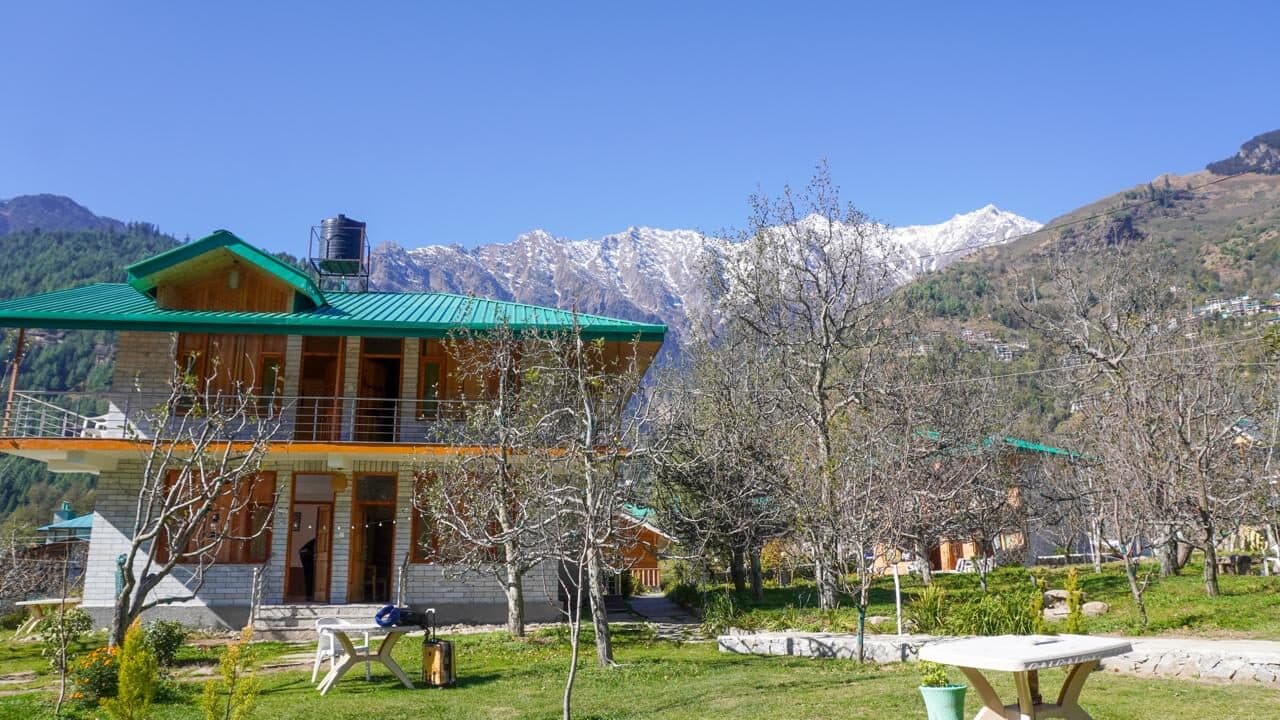 The Shanag House
Persimmon Farmstead Shanag
The high boutique hotel — wooden chalets and stone cottages on open orchard lawns.
Explore this home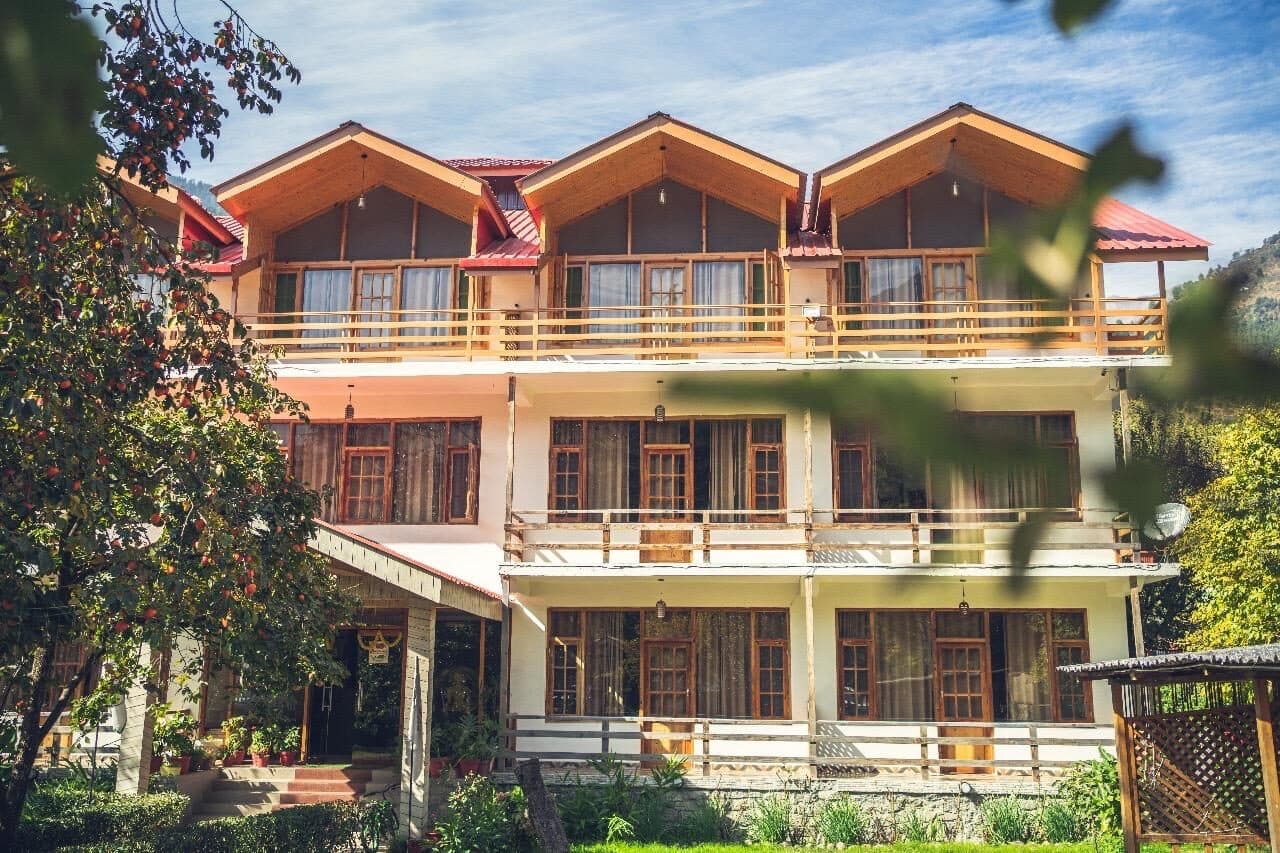 The Farmstead
Persimmon Farmstead
The flagship boutique hotel — orchard rows, a family kitchen, and the morning sun.
Explore this homeGood to know
Which Persimmon home is better for snow?
Shanag. It sits higher (around 2,050 m) and north of Manali toward the snow line, so it whitens first, usually from mid-to-late December, and holds snow longest through January and February. Badgran, 14 km south and lower, gets lighter, shorter spells but keeps sunnier, warmer winter days.
Is snow guaranteed if we book in winter?
No, and we won't pretend it is. Manali snow is unpredictable; a mild January can stay green while a single February night drops half a metre. Shanag is your best odds. If the villages skip a week, deeper snow is a short drive away at Solang or through the Atal Tunnel to Sissu.
Will there be hot water and power during snowfall?
Yes. Both homes run 24x7 hot water and power backup right through winter, which is exactly why a farmstead snow stay beats roughing it. The kitchen stays open, the tea keeps coming, and on heavy snow days we'll bring food to your room rather than make you cross a white courtyard.
Can the snow trap us or cut off the roads?
After heavy falls the climb to Shanag can ice over and need clearing, and the Solang road and Atal Tunnel close during and just after snowfall until machines clear them, sometimes for most of a day. It usually clears within hours. Keep arrival and departure days flexible in peak snow weeks.
Tell us your dates. We'll confirm, personally.
You send a request, a real host confirms it by WhatsApp — usually within a few hours.