
Apple Harvest Season in the Kullu Valley: A Host's Guide to Autumn
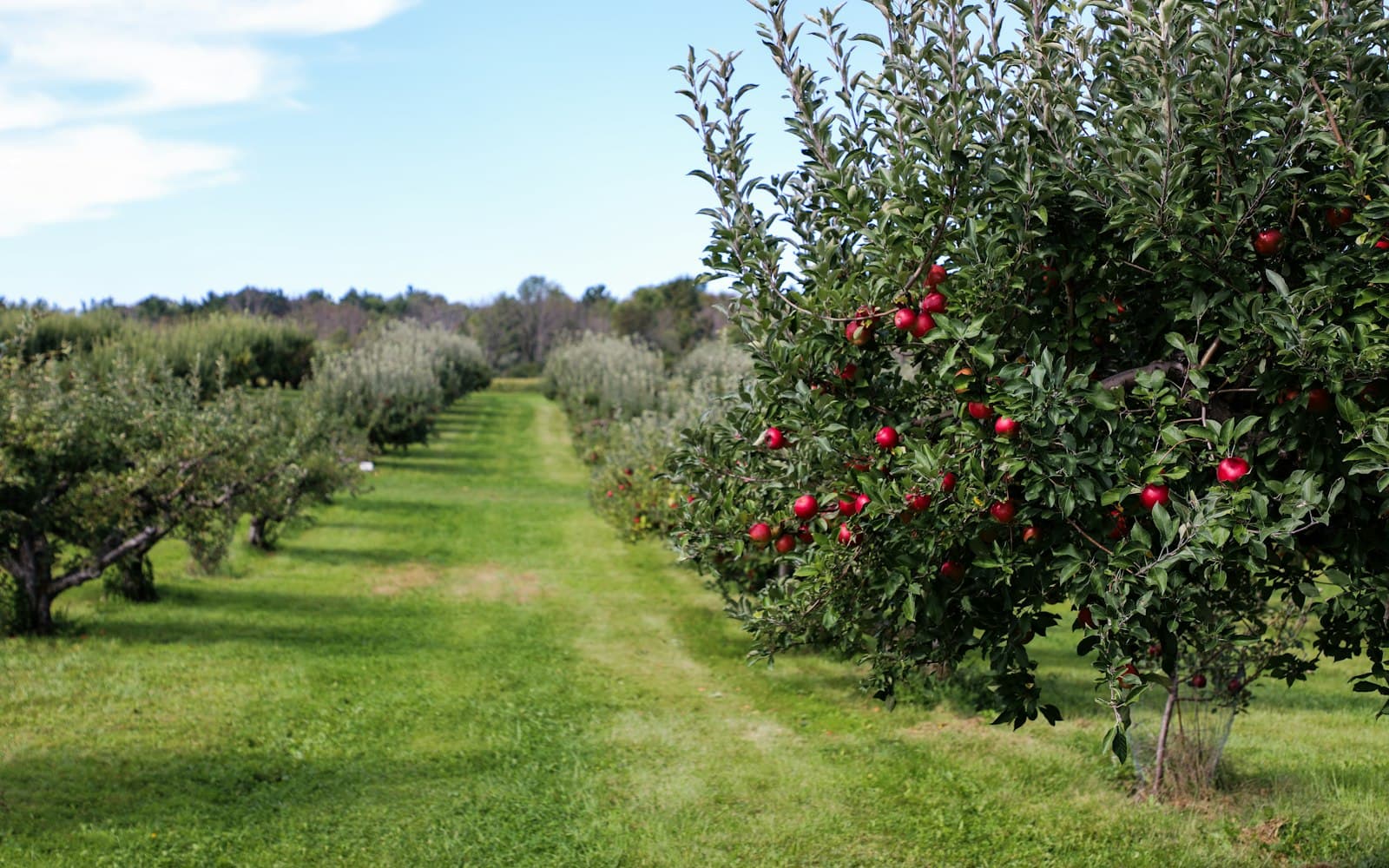
There is a fortnight in late September when you can smell the harvest before you see it. Drive up the Kullu–Manali highway with the window down and somewhere around Patlikuhl the air changes — a sweetness that sits on top of the diesel and the river-cold, unmistakably apple. Wooden crates stacked head-high outside every roadside godown, tractors nosing out of orchard gates, and the particular sound of the season: fruit tumbling into graders, and the tok-tok of nails going into telescopic cardboard cartons. If you have only ever known Kullu as a summer place — the paragliding, the Beas, the queue for the Solang cable car — autumn is the valley showing you what it actually does for a living.
We run two orchards. Our first home sits at 14 Mile in Badgran, about 14 km south of Manali town on the highway, at roughly 1,800 m. Our second, at Shanag near Bahang, is 4–5 km north of Manali toward Solang, higher up at around 2,050 m. That 250-odd metres of altitude between them matters more than you'd think during harvest — it's most of the reason our two properties don't ripen at the same time. This is our attempt to explain what the six weeks of harvest are really like, from inside the fence rather than from the highway.
When the harvest actually happens
The short answer most people want: apple harvest in the Kullu valley runs roughly from the last week of August into the third week of October, and the heart of it is September. But 'apple season' is not one date — it's a wave that climbs the mountain. The valley floor and the lower orchards colour up first; the high belt above 2,200 m finishes last, sometimes nudging into early November. So the honest answer depends on which slope you're standing on.
On our patch, the rough calendar looks like this, and it shifts a week or so every year depending on how the summer ran:
- Late August to mid-September: the early Royal and lower-belt orchards colour up first. Badgran, being lower, tends to lead.
- Mid-September to early October: the main flush — the bulk of the Royal Delicious crop across the mid-valley. This is the busiest, best-smelling window.
- Early to mid-October: the higher orchards around Shanag and above finish, plus the later spur-type varieties.
- Mid-to-late October: tail-end picking, and the last trucks leaving the mandis before the weather turns.
If you want to actually see loaded trees and be handed a warm apple off the branch, aim for the middle three weeks of September through the first week of October. Come in the last week of October and the picking is largely done — you'll get gorgeous light and empty orchards, which some guests prefer, but the trees will mostly be bare.
How a Kullu orchard actually works
Apples arrived here properly in the early twentieth century — the story every local tells is of Samuel Stokes, an American who planted Red Delicious stock at Kotgarh in Shimla district around 1916, and the fruit worked its way north into Kullu over the following decades. What started as a curiosity is now the spine of the district's economy. Himachal grows the lion's share of India's apples, and a very large slice of that comes off these Kullu and Shimla slopes. When people here say the harvest was 'good' or 'bad', they mean the year was good or bad, full stop.
An orchard year is a long build-up to these six weeks. Pruning happens in the deep cold of December and January, when the trees are bare and dormant and you can see their architecture. Blossom comes in April — pink-white and, for about ten days, genuinely one of the loveliest things in the valley. Then the whole summer is a slow argument with the weather: enough winter chilling hours for the trees to set fruit properly, timely rain, and a real dread of hail, which can shred a season's crop in fifteen minutes. A single bad hailstorm in May or June and an orchardist spends the rest of the year selling dented fruit at a discount.
By September the argument is settled and the work becomes physical. Pickers move through the rows with cloth bags slung across the chest, twisting each apple up-and-off so the stalk stays on the fruit and the fruit-bud stays on the tree for next year. Everything comes to a sorting area where fruit is graded by size and colour — the big, evenly-red apples go into the top grades and travel furthest; the smaller and blemished fruit sells locally, gets juiced, or ends up, gloriously, in a kitchen like ours. The graded fruit is packed into those telescopic cartons, and trucks run it down to the mandis. Most of the district's fruit funnels through the big market at Bandrol, just north of Kullu town, and from there out to Delhi and beyond.
“A host's note: if you're staying with us in mid-September, you'll probably be woken early by the sorting. We're not going to pretend a working orchard is silent at harvest. But there's a warm apple waiting for you at breakfast, straight off a tree you can walk to in slippers, and that's a fair trade.”— Your hosts at Persimmon
The varieties, and how to taste the difference
Say 'Kullu apple' and most people picture the Red or Royal Delicious — deep crimson, that classic heart shape with the five little bumps at the base. It's still the backbone of the valley, prized for colour and travel-hardiness more than for being the crispest apple you'll ever eat. But there's a lot more on the slopes if you know to ask.
- Royal Delicious — the mid-valley workhorse, sweet, aromatic, softens if you keep it too long. Peak here through September.
- Red Delicious and Rich-a-Red — the deep-red strains that made the valley's reputation; what you'll see stacked in most crates.
- Golden Delicious — yellow-green, honeyed, softer; wonderful for eating fresh and for cooking, less of a keeper.
- Granny Smith — tart, hard, green; grown here too and brilliant for baking because it holds its shape.
- Spur and newer high-colour strains — more compact trees, later-ripening, increasingly planted in the higher belts.
- The old local desi apples — small, sometimes russeted, often unglamorous, and frequently the most interesting thing you'll taste all trip.
If you only do one taste comparison while you're here, put a supermarket-shipped Delicious next to one picked that morning off the tree. The shop apple has been in cold store, trucked, and handled; the tree apple is still faintly warm from the sun and tastes like a different fruit. That gap is the entire argument for coming at harvest rather than reading about it.
Picking, and the honest version of 'apple picking'
Guests ask about apple picking imagining an American pick-your-own farm with a ticket booth and a wagon ride. Kullu isn't quite that. These are commercial orchards where a family's year depends on the fruit getting off the tree cleanly and into the right grade — a busload of visitors pulling stalks out and dropping bruised apples is a genuine cost. So there's no organised 'pay-and-pick' industry here the way there is in, say, Himachal's more tourism-heavy pockets or abroad.
What you can absolutely do, if you're staying somewhere with its own trees: walk the rows with us, learn the twist-and-lift so you don't damage the spur, taste across varieties, and help with a bit of the picking and sorting if the mood takes you. It's hands-on and real rather than a photo op. We'll show you how the graders work and why a 2 mm difference in diameter changes which city an apple ends up in. If you specifically want the pick-your-own experience as a paid activity, a handful of homestays and farms around Naggar and the Katrain–Patlikuhl belt do run informal orchard visits during season — ask around locally, expect to pay a small per-head fee, and confirm before you drive out, because whether it's on offer depends entirely on how that particular family's harvest is going that week.
A caution worth stating plainly: never wander into an orchard and start picking without asking. It reads to an orchardist exactly the way it would if a stranger walked into your kitchen and started eating — this is someone's livelihood on the branch, not decoration. Ask, and almost everyone will happily hand you fruit. Help yourself uninvited and you've made an enemy.
Farm-to-table, when the kitchen is fifty steps from the tree
We're a food-first farmstead — it's the thing guests come back for, and honestly the thing we most enjoy — and harvest is when the kitchen and the orchard basically merge. When the trees are dropping seconds and windfalls faster than they can be sold, we cook. Slow-stewed apple with cinnamon at breakfast, apple in the pork and the pulao, a proper apple crumble with the tart green fruit that holds up in the oven, and cider vinegar that we bottle and give guests to take home. The Golden Delicious and the local desi apples that don't travel well are the ones that taste best on the plate, which is a small piece of poetry: the fruit the market undervalues is the fruit our kitchen wants.
Beyond the orchard's own fruit, autumn is peak season for the wider Himachali larder. It's walnut and wild-plum time, the last of the season's stone fruit, and the beginning of the local rajma and the mountain vegetables coming good. We lean into it. If you care about where your food came from, September and October are when the answer is 'that tree, this morning'. You can read more about how we cook on our dining page, and we're always happy to walk you through a harvest-season menu on WhatsApp before you arrive so we can plan around what's ripe.
Autumn weather, and why we think it's the best season
Here's the practical case for autumn, beyond the fruit. September and October are, to our minds, the finest weeks in the valley — and the monsoon is the reason. The rains taper through September, and once they've cleared the air is scrubbed clean; the haze that softens the peaks all summer lifts, and you get those hard, blue, snow-lined mountain days that photograph like a postcard and feel even better in person.
Rough temperatures to pack for, at our altitude:
- September: pleasant days around 20–25°C, nights cooling to roughly 10–14°C. A light jacket for the evenings.
- October: crisper, days around 15–20°C, nights dropping to 5–10°C and colder by month-end. Proper layers, and something warm for after dark.
- Early November: distinctly cold at night, low single digits, first snow possible on the high passes above Solang. Woollens, not a fleece.
A few honest cautions. The tail of the monsoon can still throw a wet spell into mid-September — don't assume clear skies for a September booking, and build a buffer day into any high-mountain plan. The Rohtang and Atal Tunnel side can see its first serious snow from late October, which occasionally shuts the very top of the valley at short notice; if a trip to the far side of the tunnel matters to you, keep it flexible. And our own orchard road at Shanag ices over on the shaded stretches by mid-December — not a September problem, but worth knowing if you're weighing a late-autumn stay against a winter one. Autumn is the sweet spot precisely because it sits before all of that.
Getting here in harvest season
One purely practical note, because it catches people out. Harvest is also peak freight season on the Kullu–Manali highway. All those trucks carrying fruit down to the mandis share the same road you're on, and the stretch through Kullu and Bhuntar can crawl in the afternoons. If you're driving up from Chandigarh — figure 8–10 hours for the roughly 300 km on a good day — try to clear the lower valley before the afternoon truck rush builds. The overnight Volvo buses from Delhi run through the night and mostly beat the freight; a seat runs somewhere in the region of ₹1,200–2,500 depending on operator and how far ahead you book. From Manali town, we're a short ride south to Badgran or north to Shanag; message us on WhatsApp and we'll tell you exactly how to time the last leg around the harvest traffic. Our full directions live on the how-to-reach-Manali page.
Come in September if you want the trees heavy and the whole valley smelling of fruit. Come in the first half of October for clean mountain light and the last of the picking. Either way, if apples are the reason, book early — these are our busiest weeks, and there's only so much orchard to go around. Send us a message and tell us what you're hoping to taste.

Written by the family that runs Persimmon Farmstead — the two boutique hotels near Manali. We write about the valley the way we'd tell a friend at the kitchen table.
Good to know
When exactly is apple season in Kullu, and when should I visit to see it?
The harvest runs roughly from late August into the third week of October, with September as the heart of it. To actually see loaded trees and be handed fruit off the branch, aim for mid-September to the first week of October. Lower orchards like our Badgran home ripen a little before the higher ones near Shanag, so there's a good window either way. By late October the picking is largely done.
Can I pick apples myself at the orchard?
Kullu doesn't really have organised pay-and-pick farms like abroad — these are commercial orchards where the crop is a family's income. If you're staying somewhere with its own trees, like us, you can absolutely walk the rows, learn the proper twist-and-lift, taste across varieties and help with a bit of picking and sorting. Just never wander into someone's orchard and pick uninvited; always ask first, and most people will happily hand you fruit.
What's the weather like during harvest season?
It's the best window of the year, in our view. September days sit around 20–25°C with nights of 10–14°C; October is crisper at 15–20°C by day and 5–10°C at night, colder by month-end. Once the monsoon clears in September the air turns clean and the peaks come out sharp. Pack layers and something warm for evenings, and note the tail of the monsoon can still bring a wet spell in early September.
Which apple varieties will I find, and can I take some home?
The Royal and Red Delicious strains are the backbone, but you'll also find Golden Delicious, Granny Smith, newer high-colour spur types, and the small local desi apples that rarely reach shops. Yes, you can take fruit home — it's the whole point of the season. We can also send you off with our own cider vinegar. Message us on WhatsApp before you arrive and we'll plan around whatever is ripest that week.
Tell us your dates. We'll confirm, personally.
You send a request, a real host confirms it by WhatsApp — usually within a few hours.