
Apple-Season Recipes from the Orchard
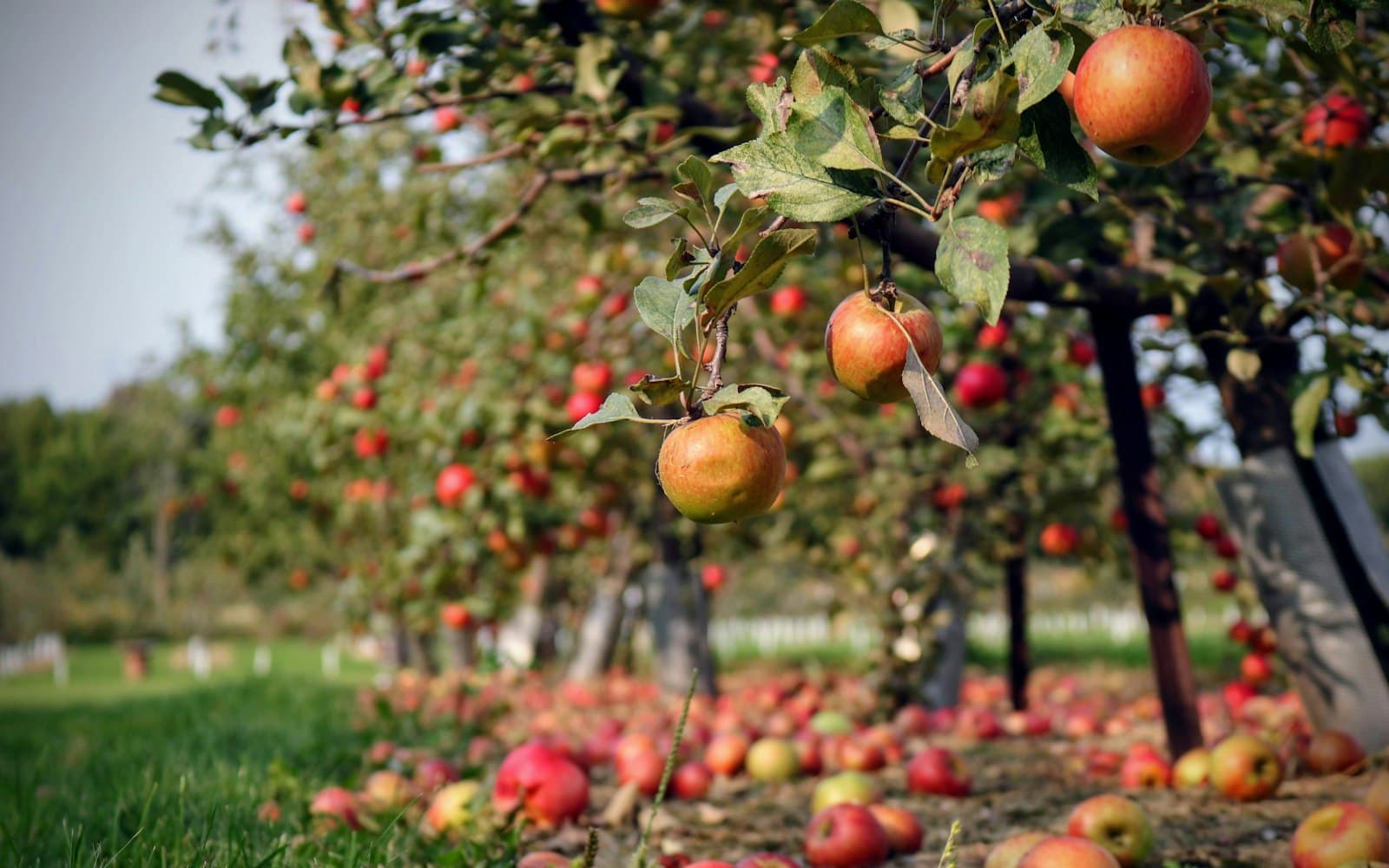
When the Kullu apples ripen in September and October, our farm kitchen turns them into three things we make on repeat: a spiced apple-and-onion chutney, a rustic open-faced apple pie, and stewed apples for breakfast. We use tart local Royal and Golden varieties, cook in small family-kitchen batches, and lean on hill spices — cinnamon, clove, a little ginger — rather than anything fancy.
We planted with the seasons in mind, but nobody warns you how the orchard behaves once it decides to give. For most of the year an apple tree is a quiet neighbour. Then late August turns, the nights get cold, and inside a fortnight the branches are heavy enough to need propping. Two of us cannot eat that. So we cook. This is not a chef's column — our kitchen is a small family kitchen, four burners and a lot of patience, not a hotel line. But apples are forgiving, and after a few autumns we have our short list of things worth making. Here it is, honestly.
When the harvest actually happens here
People assume Himachal apples come off the trees in one clean week. They do not. Down at Badgran, around 14 km south of Manali on the highway at roughly 1,900 m, our earlier varieties start colouring by the first week of September and we are picking through to early October. Up at Shanag, a few km north of Manali and higher toward the snow line, the same trees run a week or two later because the cold arrives sooner and the fruit hangs on. So across our two homes we get a stretched harvest — nearly six weeks of apples — which is lucky for anyone cooking, because you are never short.
The commercial pickers are after size and colour for the mandi. We are after the ones they reject: the small, the lopsided, the wind-fallen with a bruise on one cheek. Those are the cooking apples. A perfect table apple is wasted in a pot; a flawed tart one is exactly what you want.
The local varieties, and which one for what
You do not need to know apple cultivars to eat well, but it helps to know why we reach for one over another. Kullu valley grows more than the supermarket lets on. These are the ones that pass through our kitchen:
- Royal Delicious — the deep-red one everyone pictures. Sweet, soft, a little floury when cooked. We eat it out of hand and use it to soften the tartness of a chutney, not as the backbone of a pie.
- Golden Delicious — green-gold, holds its shape when cooked, good acidity. This is our pie and stewing apple. If you buy one variety in a Manali mandi for cooking, buy this.
- Tydeman / early reds — the first to ripen in early September. Crisp and sharp. Perfect for chutney because they stay in pieces.
- American Trolley and the older seedling trees — smaller, uneven, properly tart. Nobody sells these; you cook them. The best applesauce we make comes off one gnarled old tree near the lower lawn.
The rule we cook by: a good apple dish wants two-thirds tart-and-firm to one-third sweet-and-soft. All sweet apples and your chutney is jam; all tart and your pie makes you wince. Mix them.
“The apples the mandi turns away are the ones we fight over in the kitchen. A bruise is not a flaw when you are about to cook the thing anyway — it is a discount the tree gave you.”— A note from the hosts
Spiced apple and onion chutney
This is the one guests ask to take home, and the one we make most. It goes with the parathas at breakfast, alongside cheese, next to the evening bonfire plates. It keeps for weeks in the fridge, which matters when the trees are still producing and you have run out of counter space.
For a batch that fills three medium jars: roughly 1 kg tart apples, peeled and diced; 2 medium onions, sliced thin; 200 g jaggery (gur, which we get from the Kullu mandi and prefer to white sugar here — it tastes of the place); 150 ml apple cider vinegar or plain white vinegar; a thumb of ginger, grated; 1 tsp mustard seeds; a stick of cinnamon; 3 cloves; half a teaspoon of chilli flakes; and salt. That is it.
Sweat the onions slow in a little oil until soft, not brown — ten minutes. Add mustard seeds and let them pop, then ginger, cinnamon, cloves. Add the apples, jaggery, vinegar, salt and chilli. Bring it up, then drop the heat and let it sit at a lazy simmer for about 45 minutes, stirring when you remember, until it goes glossy and thick and a spoon dragged across the pan leaves a track. Jar it hot. Do not skip the vinegar — it is what lets it keep, and it cuts the sweetness so the thing tastes like autumn and not like dessert. If you have Golden and Tydeman apples, use both; the Goldens melt and the Tydemans stay in pieces, and you want both textures.
A rustic orchard apple pie
We call it a pie; a French cook would call it a galette and a stricter one would call it untidy. It is a single round of pastry, apples piled in the middle, the edges folded roughly over the top. No pie tin, no lattice, no fuss. It suits our kitchen because it forgives a rolling pin that has seen better days and an oven whose thermostat we have learned to distrust.
Pastry: 250 g flour, 150 g cold butter cubed, a pinch of salt, a spoon of sugar, and just enough cold water to bring it together — start with three tablespoons. Rub the butter into the flour with your fingertips until it looks like coarse breadcrumbs, add water, bring it into a disc, wrap it and rest it cold for half an hour. This resting is the one step people skip and the one that decides whether the pastry is short or leathery.
Filling: five or six Golden Delicious, peeled and sliced thick, tossed with two spoons of jaggery or sugar, a spoon of flour to catch the juice, cinnamon, a squeeze of lemon and a small knob of butter. Roll the pastry to a rough round, heap the apples in the centre leaving a hand's width of border, and fold that border up and over in loose pleats. Brush the pastry with milk, scatter sugar, and bake hot — around 200°C — for 35 to 40 minutes until the pastry is properly brown and the apples underneath are soft when you poke them. At our altitude things take a few minutes longer than the recipe books written for the plains say; trust colour over the timer. Eat it warm. If someone has churned cream that morning, even better, but it needs nothing.
Stewed apples for breakfast
This is the humblest and the one we make daily through October. It is barely a recipe. Peel and chop tart apples, put them in a pan with a splash of water, a spoon of jaggery, a stick of cinnamon and maybe two cardamom pods cracked open. Lid on, lowest heat, fifteen minutes, stirring once. That is all. You can crush it to a sauce or leave it in soft chunks.
We spoon it over curd, over porridge, into the middle of a folded omelette-turned-sweet, or just into a bowl with the last of it warm. On a cold morning with the sun coming over the ridge into the rooms — and the rooms do get the morning sun, which guests always mention — a warm bowl of orchard apples is a quiet thing that people remember longer than they expect to. Keep a jar in the fridge; it lasts four or five days and improves the second morning.
Small notes from cooking a lot of apples
A few things we learned the slow way, so you can skip the mistakes:
- Do not peel apples until you are about to cook them — cut flesh browns fast at this altitude. A bowl of cold water with a squeeze of lemon holds them if you must prep ahead.
- Jaggery over white sugar, almost always. It is what the valley makes, it browns more kindly, and it tastes rounder against the fruit's acid.
- Cinnamon and clove are the hill defaults, but a little grated ginger in anything savoury lifts it — do not be shy with it in the chutney.
- Save your peels and cores. Simmered with water, sugar and a cinnamon stick for twenty minutes and strained, they make a pink apple cordial that is the best use of what you would otherwise throw out.
None of this is difficult. That is rather the point. The founders' goal when we left our old jobs was to make the food here a subject people talk about in town, and the truth is the food people remember is rarely complicated — it is a chutney made from apples off the tree twenty steps from the pan, cooked by someone who is glad you are eating it. Come in apple season, September into October, and you will catch the kitchen mid-batch. We will very likely send a jar home with you.

Written by the family that runs Persimmon Farmstead — the two boutique hotels near Manali. We write about the valley the way we'd tell a friend at the kitchen table.
Good to know
When is apple season in the Kullu valley near Manali?
Apples in the Kullu valley ripen from early September to early October. Lower orchards around Badgran, roughly 1,900 m, colour first, while higher orchards toward Manali and Shanag run a week or two later because the cold arrives sooner. Across the valley that gives nearly six weeks of harvest, with peak picking in mid to late September.
Which apple variety is best for cooking chutney or pie?
For pies and stewing, Golden Delicious is the pick — it holds its shape and keeps good acidity. For chutney, early tart reds like Tydeman stay in firm pieces. Royal Delicious is sweet and soft, better eaten fresh or used to round out tartness. The best cooking result mixes about two-thirds tart-firm apples with one-third sweet-soft ones.
Why use jaggery instead of sugar in apple recipes?
Jaggery, called gur, is what the Kullu valley makes, and we buy it from the local mandi. It carries a rounder, molasses-like flavour that stands up to the apple's acid better than white sugar, and it browns more kindly in a slow simmer. It is our default for chutney, stewed apples and the pie filling, though plain sugar works if that is what you have.
Can guests try apple dishes at Persimmon Farmstead in autumn?
Yes. Through September and October our small farm kitchen cooks with apples picked from our own orchard, so at that time of year you will usually find stewed apples at breakfast and chutney on the table. It is a family kitchen, not a formal restaurant, so dishes shift with what the trees give that week. Tell us ahead if you would like something specific.
Tell us your dates. We'll confirm, personally.
You send a request, a real host confirms it by WhatsApp — usually within a few hours.