
Atal Tunnel & Sissu: A Day Trip From Manali
The Atal Tunnel and Sissu day trip from Manali covers roughly 40 km one way and takes about 2 to 2.5 hours to Sissu. No permit is needed for the tunnel itself. Leave by 8 AM, see the Sissu waterfall, lake and gompa, eat a hot lunch, and turn back by 3 PM before the return traffic builds.
We send more guests up to Sissu than to almost anywhere else, and it is the one trip we tell people to do on their first clear morning rather than saving for later. The weather in Lahaul changes fast. A blue sky at breakfast is worth more than a lazy start, and the whole thing folds neatly into a single day if you are honest about timings.
Why the Atal Tunnel changed this trip
Before the Atal Tunnel opened in October 2020, reaching Lahaul meant driving over the Rohtang Pass at around 3,980 m, which was seasonal, permit-bound, and often a four-hour crawl of tourist jeeps in the snow. The tunnel cut straight under the Pir Panjal at about 3,100 m and turned a half-day ordeal into a comfortable morning drive.
At 9.02 km it is one of the longest highway tunnels in the world above 3,000 m, and it stays open through most of winter when Rohtang is shut under metres of snow. That single fact is why Sissu, which almost nobody visited a decade ago, is now a proper day trip from our door. You drive through the mountain instead of over it.
The drive from our farmstead
From Persimmon Farmstead at Badgran, you are about 14 km south of Manali town, so you first drive north through Manali and up the Solang road toward the tunnel. Budget roughly 60 to 75 minutes just to clear Manali and reach the south portal, more on a busy weekend when the Solang stretch clogs. From our Shanag home near Bahang you save 15 to 20 minutes on this leg, since Shanag already sits north of town on the same road.
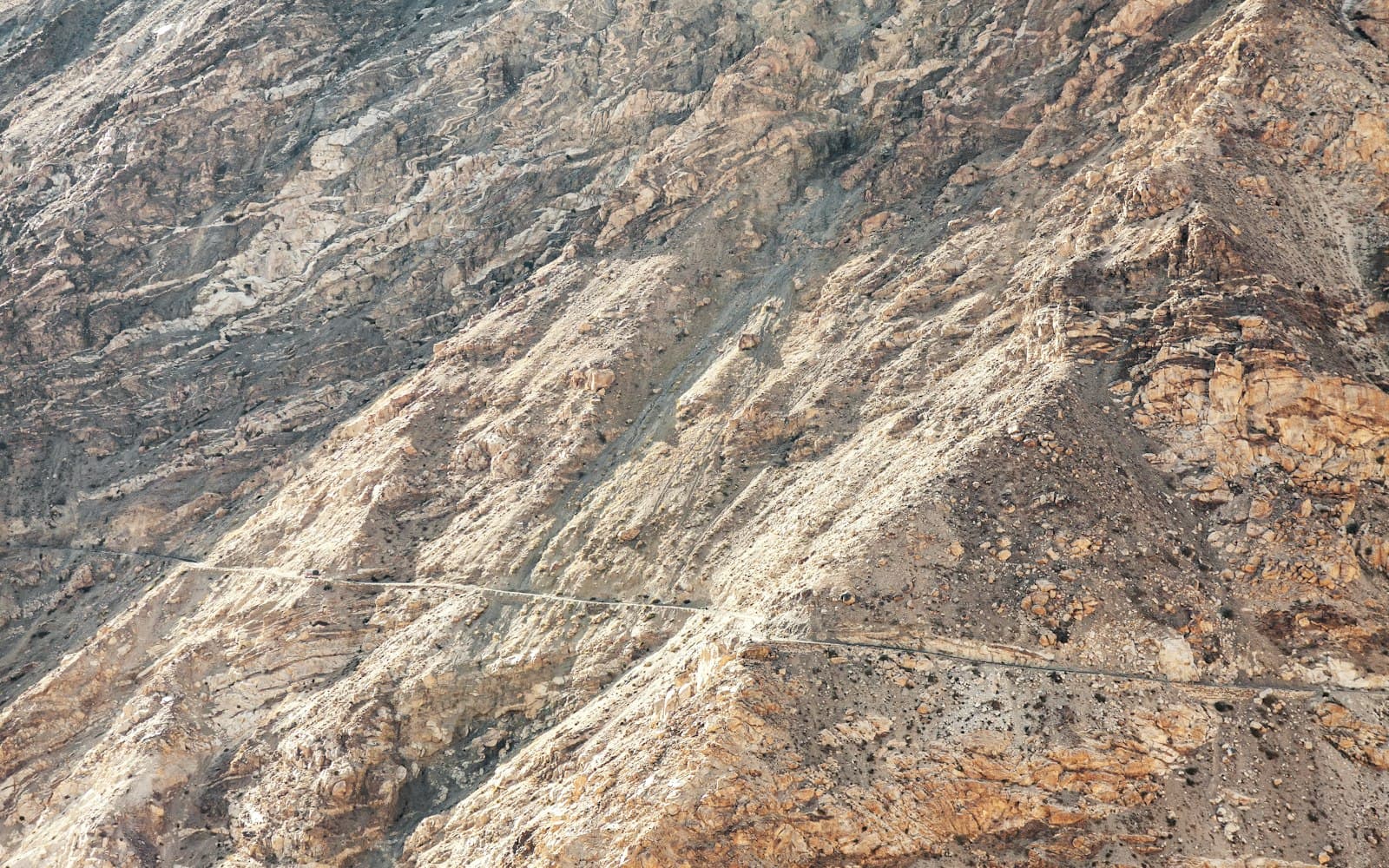
The climb from Manali to the tunnel gains height quickly through Kothi and Gulaba. Once you pass the south portal, the tunnel itself takes about 10 to 12 minutes at the enforced 60 km/h speed limit, and it is genuinely cold and windy inside even in June. Then you emerge into Lahaul, and the landscape flips. The green deodar of the Kullu side gives way to bare brown-and-ochre mountains, wider valleys, and the milky Chandra river far below. It looks like a different country because, geographically, it nearly is.
What to see in Sissu
Sissu village sits at around 3,120 m, roughly 10 km beyond the north portal, and it is the natural first stop. Three things are worth your time here, and none of them takes long, which is exactly what makes the day work.
- Sissu waterfall (Palden Waterfall): a tall, thin fall dropping off the cliff face across the river, fed by the Palden Lhamo glacier. It runs hardest in late spring and summer as the snow melts; by deep winter it thins to an icy trickle.
- Sissu lake: a small artificial lake right by the highway with the snow peaks reflected in it on a still morning. It is the postcard shot everyone stops for, and there is easy parking beside it.
- The gompa and village walk: a short wander into the village past whitewashed Buddhist homes, prayer flags, and a small monastery. This is Lahaul culture, not Kullu culture, and it is worth the ten quiet minutes.
- Willow-lined riverbank: flat, walkable ground by the Chandra where families sit through the afternoon. In winter this whole basin is a snow field.
If you have energy and time, you can push another 25 km up the road to Keylong, the district town, or stop earlier at Gondla with its old wooden tower-fort. But for a comfortable single day out of Manali, Sissu is the right turnaround. Going further eats into your daylight buffer, and the return through the tunnel and back down to us is not a drive you want to be doing in the dark.
Snow, seasons and what to expect month by month
This is the part people get wrong. Because the tunnel stays open, they assume Lahaul is a mild all-weather stop. It is not. Sissu is higher and colder than Manali in every season, and its character swings hard through the year.
December to February, the Sissu basin is a proper snow field. This is when it draws crowds for snow play, and the road can genuinely close for hours after fresh snowfall while the plough clears the north portal approach. Temperatures sit below freezing, often minus 5 to minus 12 degrees, and the waterfall part-freezes. March to April is shoulder season with melting snow and gushing meltwater. May to June is the sweet spot: green willows, a roaring waterfall, and daytime highs around 15 to 20 degrees while Manali is warmer below. July to August is monsoon, and this matters for safety, which we cover next. September to October is our favourite window, with crisp clear air, golden Lahaul light, and thin crowds.
“If it snowed in Manali overnight, call us before you leave. We ring the tunnel police check post most mornings in winter to hear whether the north portal is open, and there is no sense driving an hour up the Solang road only to be turned back at Gulaba. A five-minute call from our kitchen saves you the whole morning.”— A note from the hosts
Honest driving and traffic notes
The tunnel needs no permit and is free to drive through, which is the single biggest reason this trip is easy. Rohtang Pass, if you ever go over the top instead of through, still needs an online permit and a green-tax payment and is closed to traffic on Tuesdays for maintenance. But for Sissu you never touch Rohtang, so ignore all of that.
The real bottleneck is not the tunnel, it is the Manali-to-portal stretch on weekends and holidays. On a Saturday in peak season the Solang road can back up badly with day-trippers and paragliding traffic, and a 60-minute drive stretches past 90. Leaving our gate by 8 AM, ideally 7.30 AM, is the whole game. The other pinch point is the return: everyone comes back through the tunnel between 3 and 5 PM, so the south portal and the descent into Manali crawl. Turn for home by 3 PM and you slide back down while the crowd is still up top.
- Fuel up in Manali before you go. The last reliable petrol pump is in Manali; do not rely on finding fuel in Sissu.
- Carry warm layers even in summer. It can be 25 degrees in Kullu and 12 with a cold wind in Sissu on the same afternoon.
- Mobile signal drops inside the tunnel and is patchy in Lahaul. Download your route offline and tell us your plan before you leave.
- A regular hatchback or sedan handles the tunnel and the Sissu road fine in summer. In winter after snow you want a driver who knows the road, and sometimes chains.
- Do not swim in or wade into the Chandra river. It is glacial, fast, and much colder and stronger than it looks.
Food, and how we handle the day
Sissu has a small cluster of dhabas and cafes near the lake serving Maggi, rajma-chawal, thukpa, momos, and endless chai. It is honest hot food at high altitude and exactly what you want after the cold tunnel, though the choice is limited and it can run out on a busy day. Do not expect a spread; expect a warm plate and a good view.
What most of our guests do is take breakfast with us first, because leaving early on a full stomach beats hunting for food in a queue at 11 AM. Our kitchen is a small family kitchen, not a hotel buffet, so tell us the night before and we will have parathas, eggs, and hot chai ready by 7.15 AM. On the way back, plenty of people ask us to keep dinner warm, and a bonfire evening after a long cold day in Lahaul is one of the better ways to end it. We are not a fine-dining restaurant, but we cook the food we would feed our own family, and that is rather the point.
A realistic hour-by-hour plan
Here is the shape of the day we suggest, built around leaving from and returning to Persimmon Farmstead.
- 7.15 AM: breakfast at the farmstead.
- 8.00 AM: leave, drive north through Manali and up the Solang road.
- 9.15 to 9.30 AM: reach the south portal, cross the tunnel.
- 10.00 AM: arrive Sissu; lake, waterfall viewpoint, and village walk.
- 12.00 to 1.00 PM: hot lunch at a Sissu dhaba.
- 1.30 to 2.30 PM: relax by the river or push a little further if daylight allows.
- 3.00 PM: turn back to beat the return traffic.
- 4.30 to 5.00 PM: back with us for chai, and a bonfire if the evening is cold.
That is a full, unhurried day with room for the weather to misbehave. If Lahaul is clear and you are enjoying it, the buffer lets you linger; if a cloud rolls in, you are already heading down. Either way you are back at the farmstead in good time, and the mountains you were standing under a few hours ago are the same ones you will watch go pink from bed.
We have done this drive in every season, and it never gets old. Ask us at breakfast and we will sketch the current road conditions on the back of a napkin, tell you which dhaba is open this week, and point you at the quiet corner of the riverbank the tour buses miss.

Written by the family that runs Persimmon Farmstead — the two boutique hotels near Manali. We write about the valley the way we'd tell a friend at the kitchen table.
Good to know
Do you need a permit to drive through the Atal Tunnel to Sissu?
No. The Atal Tunnel needs no permit and is free to drive through, which is what makes the Sissu day trip so easy. You only need a permit and green-tax payment if you go over Rohtang Pass instead, which you don't for Sissu. Just observe the 60 km/h tunnel speed limit and the no-stopping rule inside.
How far is Sissu from Manali and how long does it take?
Sissu is about 40 km from Manali town via the Atal Tunnel, and roughly 2 to 2.5 hours one way including the drive up through Manali. From our Badgran farmstead, add about 15 minutes since we sit 14 km south of town. Weekend traffic on the Solang road is the main thing that stretches the time.
Is the Atal Tunnel and Sissu open in winter?
Yes, usually. Unlike Rohtang Pass, the Atal Tunnel stays open through most of winter, so Sissu is reachable when the old route is snowed shut. However, after fresh snowfall the north-portal approach can close for a few hours while it's ploughed. In winter, always check road status the morning you go; we ring the tunnel check post for our guests.
When is the best time to visit Sissu?
May to June for green willows, a full waterfall, and mild days around 15 to 20 degrees. September to October for crisp, clear light and thin crowds. December to February for snow, though expect below-freezing cold and possible short road closures. Avoid heavy monsoon spells in July and August, when Lahaul roads carry a landslide risk.
Where do you eat on the Sissu day trip?
Sissu has small dhabas and cafes near the lake serving Maggi, thukpa, momos, rajma-chawal and chai, which is honest hot food after the cold tunnel, though the choice is limited. Most of our guests take an early breakfast with us first and ask us to keep dinner warm for their return, often with a bonfire.
Tell us your dates. We'll confirm, personally.
You send a request, a real host confirms it by WhatsApp — usually within a few hours.