
Hadimba & Manu Temples: A Slow, Respectful Morning in Old Manali
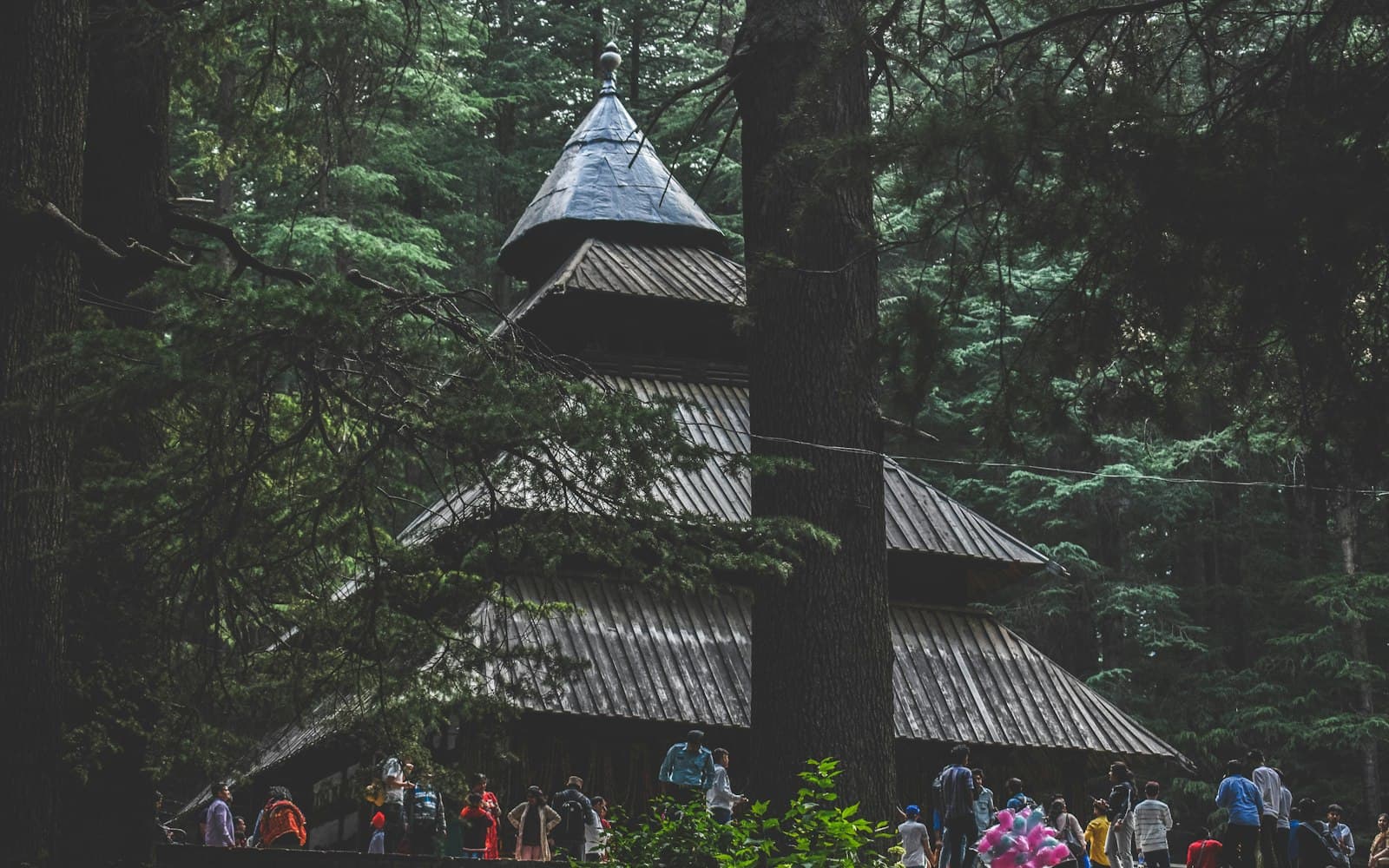
Hadimba Devi Temple sits in the Dhungri cedar forest above Old Manali, about 2.5 km from Mall Road, and is a 1553 wooden shrine to the Mahabharata's Hidimba. It's open roughly 8 am to 6 pm, entry is free, and it's best visited by 8:30 am before the crowds. Manu Temple, honouring the lawgiver-sage Manu, is a short uphill walk further into Old Manali.
We drive this loop more often than we'd admit. When guests ask for one temple to see in Manali, it's Hadimba, and the honest reason isn't the temple alone — it's the forest around it. The Dhungri deodars are the oldest, tallest cedars most people from the plains will ever stand under, and the shrine underneath them is a genuinely strange, wonderful piece of Himachali history that most visitors rush past in eleven minutes flat.
Who Hadimba was, and why the temple is shaped the way it is
The goddess here is Hidimba — in the Mahabharata, a rakshasi who met Bhima when the Pandavas were wandering in exile, married him, and bore their son Ghatotkacha. That's not a footnote you'll find on most tour-bus itineraries, but it's the whole reason the temple exists. Locals in the Kullu valley revere her as a mother-protector, not a demon; the story softened over centuries into devotion. During the Dhungri Mela each May, she's honoured for several days with drums and dancing, and it is genuinely one of the loudest, most joyful things we've seen in the valley.
The building itself was raised in 1553 by Raja Bahadur Singh. It's a pagoda-style wooden temple — four tiered roofs climbing to a small brass cone, walls of dark deodar carved with dancers, animals and vines worn smooth by five centuries of weather and hands. There's no grand idol inside; the sanctum holds a rock, a natural stone the goddess is believed to inhabit. First-timers often peer in expecting more and miss the point entirely: the rock is the deity. That restraint is very Kullu.
“Look up before you look in. The best carvings are on the doorframe and the eaves, and everyone's so busy queuing for the sanctum that they never notice the horns, the little wooden animals, the ibex skulls nailed above the door. That's the old mountain faith showing through the Hindu one.”— A note from the hosts
The Dhungri cedar forest — the real reason to come
The temple stands in a grove of deodar cedars, the Himalayan cedar Himachal takes its building timber and its poetry from. Some of these trees are well over a hundred feet tall and old enough that the temple was built among them, not the other way round. The light comes down in shafts, the ground is soft with needles, and even on a busy day you can walk sixty seconds off the main path and have quiet. This is why we tell guests to budget an hour, not fifteen minutes.
You'll meet the valley's small economy here too — women renting fur costumes and Kullu caps for photos, a man with an angora rabbit, and the famous yaks near the entrance you can sit on for a picture. Some of it is touristy, none of it is cruel if you're kind about it, and a photo on the yak costs roughly ₹50–100 once you've settled a price first. Settle the price first. Always.
Manu Temple, up the hill in Old Manali
A short, steepish walk deeper into Old Manali village brings you to Manu Temple, dedicated to Manu Rishi — the sage of Hindu tradition credited with surviving the great flood and re-founding humankind. The name Manali is often read as 'the abode of Manu,' which makes this small shrine, quietly, the reason the whole town has its name. It's a modest concrete-and-wood temple, nothing like Hadimba's drama, and that's exactly why we like sending people up: fewer crowds, real village life, laundry on lines, apple trees over the lane.
The climb from lower Old Manali takes 15–20 minutes on foot through narrow lanes; it's genuinely uphill, so go slow if you've just arrived from sea level and aren't yet used to the altitude here, around 2,050 m. Cars can get most of the way up but the last stretch is best on foot. Remove your shoes at the shrine, keep your voice down — people are praying, not sightseeing — and you'll be treated warmly.
Timings, entry and what it actually costs
Neither temple charges an entry fee — this is worth saying because touts occasionally imply otherwise. Here's what to plan around:
- Hadimba Devi Temple: open roughly 8 am to 6 pm daily. Free entry. Camera use inside the sanctum is restricted; photograph the exterior and forest freely.
- Manu Temple: open through daylight hours, generally 7 am to 6 pm, free entry. Quieter throughout the day.
- Parking near Hadimba: paid public parking, about ₹50–100 for a car, then a 5-minute walk to the temple gate.
- Yak / costume photos at Hadimba: negotiate first, expect ₹50–100 per photo; agree the number of clicks before you sit down.
- Best-value tip: both temples are free, so the only real spend is parking, photos and whatever chai and siddu you can't resist on the walk back.
How to dodge the crowds (this is the whole game)
Hadimba is Manali's single most visited spot, and by 11 am in peak season — May–June and the December–January snow rush — the forecourt is a slow river of people and the sanctum queue can eat forty minutes. The fix is boring and completely reliable: go early. We push guests out the door with a flask of our kitchen's coffee so they hit the temple gate by 8:30, walk the forest while it's cool and half-empty, and are back before the tour buses even leave Mall Road.
The other quiet window is late afternoon, around 4:30–5 pm, when the day-trippers have moved on and the light through the cedars goes gold. Avoid the 11 am to 3 pm block if you can. If you're coming from our flagship at Badgran, you're about 16–17 km south of Old Manali — give the drive 40–50 minutes, more on a summer weekend when the town chokes. From our Shanag home you're much closer, 5–6 km, and can be at Hadimba in 15–20 minutes, which is a real luxury on a snowy morning.
Making a proper morning of it — the Old Manali loop
Don't treat these two as a tick-box. The natural half-day is a loop: park below, walk up to Hadimba first thing, spend a real hour in the forest, then continue on foot into Old Manali proper. From there the climb to Manu Temple, then back down through the cafe lanes for a late breakfast — the Old Manali cafes don't wake up till about 9, so your timing works out perfectly.
- 8:30 am — Hadimba Devi Temple and the Dhungri cedar forest, before the crowds.
- 9:45 am — walk into Old Manali village; browse the little shops and the river bridge.
- 10:15 am — climb to Manu Temple, quiet and uphill; catch your breath and the views.
- 11:00 am — down to an Old Manali cafe for coffee, eggs, or a plate of Himachali siddu.
- 12:30 pm — a short hop further and you can add Vashisht's hot springs, about 4 km across the valley, if you've energy left.
Small courtesies that matter
These are living temples, not monuments. Dress modestly — shoulders and knees covered is the safe, respectful default, and it also just reads as good manners in a small mountain town. Take your shoes off where asked, don't point your feet at the sanctum, and keep photography of people praying to a firm no unless you've asked. Around the Dhungri Mela in May the whole area fills with devotees and the mood shifts from tourist stop to festival; if you land on those dates, come to witness, not to shop.
One honest note: the immediate approach to Hadimba can feel commercial, with stalls and photo-touts crowding the last hundred metres. Don't let it sour the visit. Push past the noise, get under the trees, stand quietly by the old wood for a minute, and the 1553 of it settles over you. That's the temple most people drive four hundred kilometres to see and then never actually see.
We're happy to send you off with directions written on the back of your breakfast bill, a flask, and the name of the chai spot we like on the walk down. That's the sort of thing our travel desk does before you've finished your eggs — ask us the night before and we'll have your morning planned around the crowds, not despite them.

Written by the family that runs Persimmon Farmstead — the two boutique hotels near Manali. We write about the valley the way we'd tell a friend at the kitchen table.
Good to know
What are the timings and entry fee for Hadimba Temple in Manali?
Hadimba Devi Temple is open roughly 8 am to 6 pm daily, and entry is completely free. There's no ticket for the temple itself; you only pay for car parking nearby (about ₹50–100) and optional yak or costume photos in the forecourt. To avoid the heaviest crowds, arrive by 8:30 am or come back around 4:30 pm.
How far is Hadimba Temple from Mall Road, Manali?
Hadimba Devi Temple is about 2.5 km from Mall Road, in the Dhungri cedar forest above Old Manali. It's a 10–15 minute drive, or a walkable 30–40 minutes uphill if you're acclimatised. Parking sits a 5-minute walk below the temple gate, and Manu Temple is a further short uphill walk into Old Manali village.
What is the story behind Hadimba Temple?
The temple, built in 1553 by Raja Bahadur Singh, honours Hidimba — the rakshasi from the Mahabharata who married the Pandava Bhima and bore their son Ghatotkacha. In the Kullu valley she's revered as a protective mother-goddess. The wooden pagoda shrine has no grand idol; devotees worship a natural rock believed to hold the goddess.
What is Manu Temple and why does it matter?
Manu Temple in Old Manali is dedicated to Manu Rishi, the sage of Hindu tradition said to have survived the great flood and re-founded humankind. The town's name, Manali, is often read as 'the abode of Manu', so this quiet shrine is effectively why Manali is called Manali. It's a modest, uphill 15–20 minute walk from lower Old Manali.
How do I avoid the crowds at Hadimba Temple?
Go early or late. Hadimba is Manali's busiest sight, and between 11 am and 3 pm — especially in May–June and the December snow season — the forecourt and sanctum queue get packed. Arrive by 8:30 am and you'll walk the cedar forest in relative quiet, or return around 4:30–5 pm for gold light and far fewer people.
Tell us your dates. We'll confirm, personally.
You send a request, a real host confirms it by WhatsApp — usually within a few hours.