
Manali in February: The Quiet Month Between Deep Winter and Spring
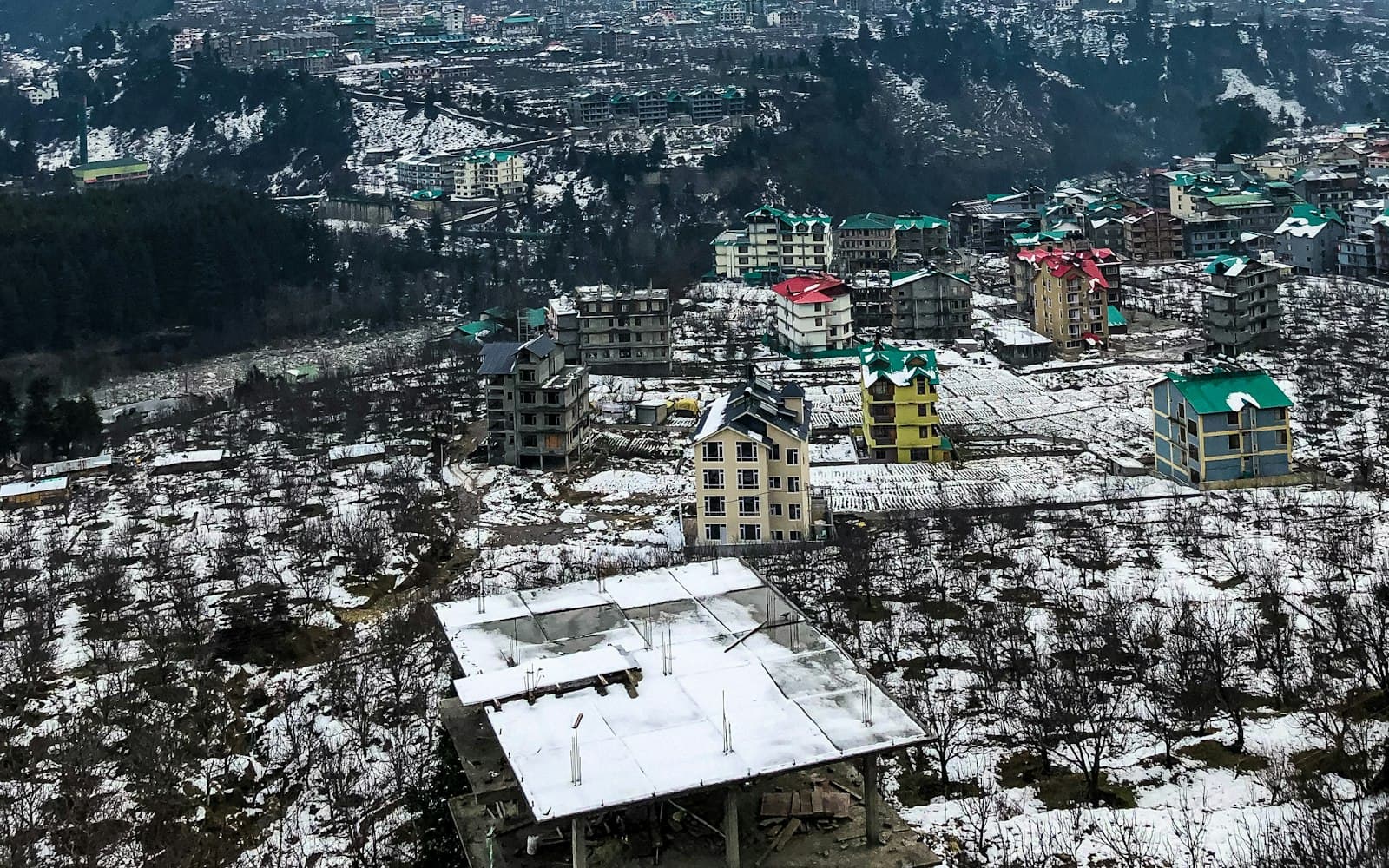
When people ask us the best time to see Manali in winter, they usually mean December — the school-holiday fortnight, the New Year crowds, the queue of cars crawling up to Solang. We understand why. But if you asked us privately, most of us who live here would nudge you towards February instead. It is the month that gets skipped over: too late for the holiday rush, a little early for the flower-and-apple-blossom crowd that arrives in April. That gap is exactly what makes it good.
We run two homes in the valley — one at 14 Mile in Badgran, about 14 km south of Manali town on the Kullu–Manali highway, sitting around 1,700 m, and the other up at Shanag near Bahang, roughly 4–5 km north of town on the road towards Solang, closer to 2,100 m. That 400-odd metres of altitude difference matters more in February than in any other month, and we'll come back to it. First, what the weather actually does.
What February weather is really like
February in Manali is cold, but it is a cleaner, more predictable cold than January. Daytime temperatures in town typically sit between 8°C and 14°C when the sun is out, and it can feel genuinely pleasant by midday — you'll see people in a single fleece on a sunny terrace. Nights are a different matter. Expect roughly -2°C to 4°C in town, colder up at Shanag, where we've logged mornings around -5°C to -6°C after a clear night. The orchard grass at Badgran holds frost until the sun climbs over the ridge, usually around 8:30–9:00 a.m. this time of year.
The big variable is snow. Early February often brings the season's more reliable spells of fresh snow, driven by western disturbances rolling in from the west. When one arrives, town can get a dusting to a few inches; Shanag and everything above it gets considerably more. By mid-to-late February the weather starts to swing — you get long runs of dry, brilliantly clear days with sharp blue skies and the mountains standing out crisp, punctuated by the odd snowfall. It is not guaranteed snow the way late December and January are, so we're honest with guests: come in February for the light and the quiet, and treat a fresh snowfall as a bonus rather than a certainty. If snow is the whole point of your trip, book with a couple of days of flexibility and watch the forecast.
“A host note: the orchard road up to the Badgran house ices over in shaded stretches after any snow, usually clearing by late morning once the sun hits it. If you're driving your own car and it's a fresh-snow morning, message us on WhatsApp before you set off up — we'll tell you whether to wait an hour or come straight up.”— Persimmon Farmstead
The quiet you're actually paying for
The real argument for February is the emptiness. The December-January holiday traffic has thinned right out. Mall Road in the evenings is walkable rather than a shoulder-to-shoulder shuffle. The cafés in Old Manali that shut for deep winter are mostly still closed or just reopening, which some people find a shame — but the ones that stay open are calm, and you can actually get the window table. Restaurant kitchens have time for you again. The Hadimba temple in the deodar forest, which can feel like a fairground in peak season, is genuinely peaceful on a February weekday morning with snow still on the cedar branches.
For us as a food-first farmstay this is our favourite kind of guest month. Our kitchen isn't stretched, so breakfasts run long and lunches turn into afternoons. Guests tend to slow right down — a lot of what we hear back is that they came planning day trips and ended up spending two of their four days just reading in the sun on the lawn, dog asleep at their feet. February gives you permission to do that in a way a packed December weekend never does.
Snow and activities at Solang and above
Solang Valley is the engine of most winter activity, and it sits about 14 km north of Manali town — but only around 8–9 km from our Shanag house, which is one reason we send snow-chasing guests to that property in winter. From town, allow 45 minutes to an hour by car in normal conditions; after fresh snow, longer, and the last stretch can require a local driver or a vehicle with chains. From Shanag you can be at the Solang meadow in 20–30 minutes.
What's on offer in February, roughly:
- Snow play and tubing on the Solang slopes when there's cover — the short toboggan/tube runs are the mainstay for most visitors. Operators charge per ride, and prices are negotiated on the spot; expect somewhere in the region of a few hundred rupees per activity. Agree the price before you start, not after.
- The Solang ropeway (cable car) up towards the higher slopes, when running — a return ticket is usually in the ₹500–₹700 range per adult, though this changes, so confirm at the counter. It's the easy way to get above the crowd for the views.
- ATV rides and zorbing on the flatter ground, weather permitting. Again, per-ride pricing, negotiated locally.
- Skiing is possible in a beginner sense at Solang when snow allows, but Solang is not a serious ski resort. If you're a genuine skier, the real terrain is at Gulaba or the higher reaches — and for that you want a guide and the right snow, which we can help you sort.
- Atal Tunnel and Sissu on the far side, roughly a 1–1.5 hour drive from town via the tunnel (which is around 9 km long and cuts under the Rohtang range). This is the standout February day trip — Lahaul on the north side is a proper snow landscape, and Sissu waterfall and meadow are the usual turnaround point. Check that the tunnel is open before committing; it closes in heavy snow.
One honest caution about Solang: the touts and the sudden all-in 'snow suit and gumboot package' offers can feel pushy, and pricing is opaque because it floats with the crowd. Gumboot and snow-suit hire is genuinely useful — the snow is wet and your trainers will be soaked in ten minutes — and usually runs a couple of hundred rupees a set. Just fix every number before you hand anything over. We're happy to brief guests on fair rates before they head up so nobody feels fleeced.
Rohtang Pass itself, at about 3,980 m, stays closed through February and typically doesn't open until late April or May depending on snow clearing. So if a trip lists 'Rohtang' as a February stop, that's the Atal Tunnel-and-Lahaul side they mean, or the Gulaba point below the pass — not the pass road itself.
Why couples come now — the start of honeymoon season
February is when the honeymoon bookings start building, and it makes sense. The snow-and-cold-weather romance is still very much on the table, but without the frantic peak-season crowding, and with the Valentine's week and the run into the spring wedding-and-honeymoon calendar. The light is soft, the evenings are cold enough to justify a fire and a slow dinner, and the whole valley feels like it belongs to fewer people.
For couples we usually suggest the Shanag house for the closeness to Solang and the higher, snowier setting, or Badgran if you'd rather be lower, warmer at night, and surrounded by the orchard with the river not far off. Both are quiet; neither is a party place. What we can promise is unhurried food and a fire — which in February is most of what you need.
Bringing the dog
February suits dogs well — the ground is firm, the ticks and summer bugs aren't around yet, and the trails near both houses are walkable. Our homes are pet-friendly and always have been; plenty of our February guests are couples or small families travelling with a dog. Do pack for the cold: short-haired dogs feel a Shanag night as sharply as you do, so bring a coat and something warm for them to sleep on. The orchard at Badgran is the easier space for a dog to potter about off-lead.
Getting here in February
The Chandigarh–Manali road (roughly 300 km, 8–10 hours) is the normal approach and stays open through winter, though a heavy snow spell can slow the final climb past Kullu. Volvo and semi-sleeper buses from Delhi run overnight, around 12–14 hours, and Delhi–Manali is roughly 530 km. The nearest airport, Bhuntar (Kullu), is about 50 km south of town and around a 1.5-hour drive to our Badgran house — but February flights are weather-dependent and cancellations are common, so we'd never build a tight itinerary around them. Most guests come by road, and that's what we'd advise. If you're driving your own car, carry it into the valley knowing that fresh snow can mean chains on the higher stretches around Shanag and Solang.
A practical note on timing your days: the sun does real work in February. Plan your Solang or tunnel trips for late morning through mid-afternoon, when the roads have thawed and the light is best, and keep the frosty early mornings for slow breakfasts. Drive back down before dusk if roads are icy — shaded stretches refreeze fast once the sun drops behind the ridge, usually by 5:30–6:00 p.m.
What to pack
February packing is straightforward if you respect the day–night swing. It can be 12°C and sunny at noon and -5°C by the time you're back from dinner.
- Proper layers — thermals as a base, a fleece or two mid-layers, and one genuinely warm down or insulated jacket for the evenings and for Solang.
- Waterproof shoes or boots with grip. This is the single thing people get wrong. Ordinary trainers on icy orchard steps or wet Solang snow are miserable. Bring boots that handle wet snow, or hire gumboots up at Solang.
- Gloves, a warm hat and a scarf or buff — the wind at Solang and above the tunnel is what actually gets you, not the town cold.
- Sunglasses and sunscreen. Snow glare on a clear February day is real, and the high-altitude sun burns faster than people expect.
- A power bank and any medication you rely on — cold drains phone batteries fast, and remote stretches have patchy signal.
- For dogs: a coat, and a warm mat or blanket for the night.
- Cash. Solang operators, small dhabas and hire stalls are cash-first, and mountain ATMs run dry or go offline more than you'd like.
If you're the kind of traveller who wants the winter photographs without the winter queues, February is the month we'd quietly point you towards. Message us on WhatsApp with your dates and we'll tell you honestly what the snow is doing that week, which of the two houses fits your plan, and whether the tunnel and Solang are open — before you commit to anything. That's the part a weather app can't give you, and it's the part we're happy to.

Written by the family that runs Persimmon Farmstead — the two boutique hotels near Manali. We write about the valley the way we'd tell a friend at the kitchen table.
Good to know
Will there be snow in Manali in February?
Usually yes, but it depends where and when. Early February tends to bring more reliable fresh snowfall, while mid-to-late February swings between clear dry spells and the odd snow. Town may only get a dusting, but Shanag, Solang and everything higher up hold snow well. If snow is essential to your trip, keep a couple of flexible days and message us to check what that week is doing.
Is Rohtang Pass open in February?
No. Rohtang Pass (around 3,980 m) stays closed through winter and typically opens late April to May once snow clearing finishes. In February, trips described as going towards Rohtang usually mean the Atal Tunnel and the Lahaul side (Sissu), or the Gulaba point below the pass — not the pass road itself. Always confirm the Atal Tunnel is open before setting off, as it closes in heavy snow.
How much do snow activities at Solang cost?
Pricing at Solang is negotiated on the spot and floats with the crowd. As a rough guide, snow tube and toboggan rides run a few hundred rupees each, the ropeway is usually around ₹500–₹700 return per adult, and snow-suit or gumboot hire is a couple of hundred rupees a set. Always agree the price before you start, carry cash, and message us beforehand if you'd like a sense of fair rates.
Is February a good time for a honeymoon in Manali?
It's one of the best. February is when honeymoon season begins — you get the cold-weather, snow-still-possible romance without the December-January crowds, plus soft light and quiet evenings made for a fire and a slow dinner. For couples we usually suggest Shanag for its higher, snowier setting near Solang, or Badgran for warmer orchard nights lower down.
Tell us your dates. We'll confirm, personally.
You send a request, a real host confirms it by WhatsApp — usually within a few hours.