
Manali in March: Thawing Snow, First Blossom and Quiet Value
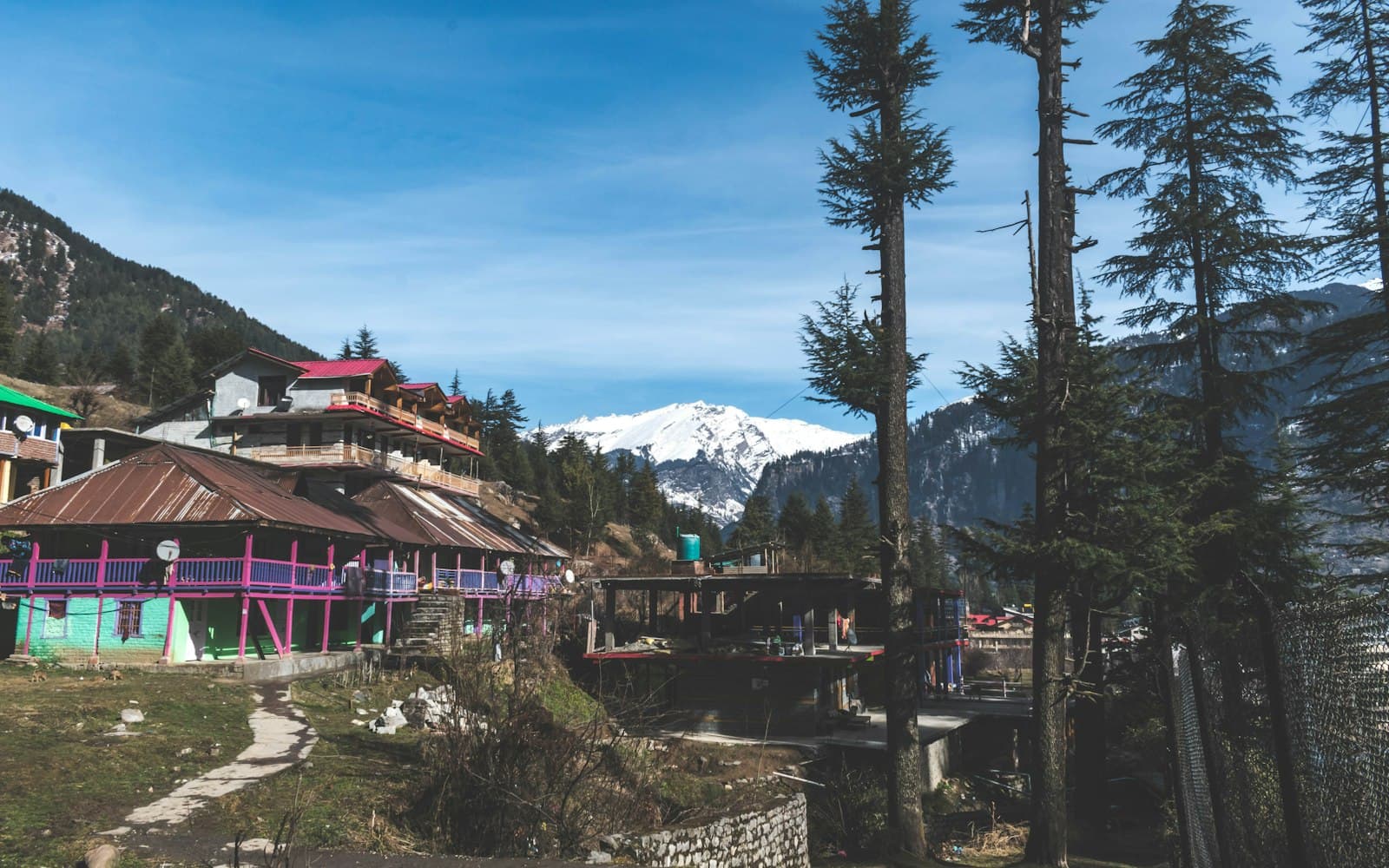
People ask us whether March is too early for Manali, and our honest answer is: it depends on what you came for. If you want to build a snowman at Solang and post it the same afternoon, come in January. But if you want the valley waking up rather than performing for a crowd, March is quietly one of the best months to be here. The snow is thawing, the apple trees are getting ready to blossom, the buses aren't yet packed with school-holiday traffic, and the light is doing something it doesn't do at any other time of year. We run two homes in this valley and March is the month we most enjoy having guests, because we finally have the time to sit and talk to them.
This is a shoulder-season month in the truest sense. Winter hasn't fully let go and summer hasn't arrived. That in-between quality is exactly what some people love and others find frustrating, so we want to be straight with you about what a March trip actually looks like from where we stand at 14 Mile and up at Shanag.
The weather in March, honestly
Manali town sits at roughly 2,050 m. In March the daytime high in town typically runs 12–18°C, climbing through the month, while nights are still cold — often 2–7°C early in March and lifting to around 6–9°C by the last week. Early March can still throw a proper cold snap at you; late March feels like spring has genuinely begun. It's a month of two halves.
Our Badgran home at 14 Mile is a touch lower than town, so it runs a degree or two milder and the mornings there thaw faster. Shanag, near Bahang, sits higher toward Solang and holds the chill longer — the difference of those few hundred metres is real, and you feel it at breakfast. Guests who move between the two properties always notice that Shanag mornings need an extra layer.
March is not a dry month. This is the tail of the western-disturbance season, and a fresh spell can still bring rain to the valley floor and snow to the higher passes and ridgelines. It's genuinely common to get two or three grey, drizzly days in a stretch, then a run of clean blue mornings. Rohtang and the high country can and do get late-season snow well into March and April. So pack for both: you'll want a warm layer and a waterproof, not just a fleece.
“A host note: don't trust a single weather-app number for "Manali." The town figure, our orchard at 14 Mile, and Shanag toward Solang can differ by 4–5°C on the same afternoon, and the passes above are a different world again. We'd rather you overpack a jacket than shiver through a sunset.”— the hosts
One practical caution we give every March guest: the orchard road and the shaded lanes can stay icy in the early mornings after a cold night, especially in the first half of the month. By mid-morning the sun has usually sorted it out. If you're self-driving, take the first hour slowly.
What to pack for a March stay
- A proper insulating layer for evenings and Shanag mornings — nights are still cold even when afternoons feel like spring.
- A waterproof shell or good umbrella. Western-disturbance spells are unpredictable and a wet afternoon is likely at least once.
- Sturdy shoes with grip. Frosty lanes early, muddy orchard paths after rain — trainers with no tread will let you down.
- Sunscreen and sunglasses. At this altitude the March sun is stronger than it feels, and snow-glare on a Solang day is real.
- Layers you can shed. A 15°C afternoon in full sun and a 4°C evening can happen the same day.
The blossom — timing it right
The whole valley is apple country, and the blossom is the event of the spring. But here's the honest bit people get wrong: full apple blossom is usually not a March affair. In the Kullu valley the apple trees typically flower from late March into April, with the main show often landing in the first two to three weeks of April depending on elevation and how the winter went. A warm year pulls it earlier; a cold, snowy winter pushes it back.
What you do get reliably in March is the run-up: the almond and plum and apricot trees blossom earlier than apple, so by mid-to-late March there's already pink and white breaking out across the lower orchards. Our Badgran property, being a little lower, usually shows colour before Shanag does. If your heart is set on standing under apple blossom specifically, aim for the very end of March into April, and message us before you book — we watch our own trees and can tell you week by week how the buds are coming along. That's the kind of thing a weather app can't tell you and we can.
What to actually do — and what to skip
March opens up more than winter does, but not everything is running yet. Here's how we steer guests.
Solang Valley (about 8–9 km north of town, ~14 km from Shanag, ~30–40 minutes by road) is the easy day out. In early March there's usually still enough snow up there for the zorbing, the tubing and the ropeway; by late March the lower snow is patchy and it becomes more of a green-valley walk with snow only on the peaks around you. The Solang ropeway (gondola) is the reliable draw — ticket prices vary by season and operator but budget roughly ₹600–900 per adult for the main ropeway; confirm at the counter as rates change. Paragliding at Solang is a short spring joyride when conditions allow — expect around ₹1,500–2,000 for a short flight, weather permitting, and note that flights are frequently grounded on windy or wet March afternoons.
Rohtang Pass (3,978 m) is the question everyone asks about. In March, Rohtang is effectively still shut for tourism — it typically opens only in May once the snow-clearing is done, and even then it needs a permit. So if a tout in town promises you "Rohtang snow point" in March, what they usually mean is Solang or Gulaba. Don't pay a Rohtang price for a Solang trip. For snow in March you go to Solang or up toward Gulaba, and that's plenty.
Old Manali comes back to life in March. Through deep winter a lot of the cafés up the hill are shut; by mid-to-late March they're reopening one by one as the season warms, though a few won't be fully back until April. It's a lovely, unhurried time to wander there before the crowds. From our Shanag home you're only a few minutes' drive from Old Manali; from Badgran it's about 20–25 minutes into that side of town depending on traffic through the market.
Vashisht (its hot springs and temple) and the Hadimba temple in the deodar forest are both good all-year and especially pleasant in the quieter March light. Jogini Falls, the walk up from Vashisht, is a gentle 45–60 minute climb and a good leg-stretch on a clear day — the falls are lower-volume before the melt really gets going, but the walk is worth it. Manu Temple in Old Manali is a short, steep stroll.
For a proper day trip, Naggar is our standing recommendation and it's at its best in the shoulder season. Naggar Castle, the Nicholas Roerich art gallery and the old stone village sit on the far bank of the Beas, about 20 km south of Manali. From Badgran you're actually closer — it's roughly a 20–30 minute drive on your side of the river — which is one of the quiet advantages of the 14 Mile location that guests don't expect.
Rough costs to budget for (March 2026)
- Solang ropeway/gondola: around ₹600–900 per adult — confirm at the counter, seasonal.
- Short paragliding joyride at Solang: roughly ₹1,500–2,000, weather-permitting and often cancelled on windy days.
- Local taxi, town to Solang and back with waiting: budget around ₹1,800–2,500 for a half-day, negotiated.
- A day-hire taxi for Naggar / Manikaran / valley sightseeing: roughly ₹2,500–3,500 depending on distance and haggling.
- Vashisht hot spring baths: free public baths; the temple complex costs nothing to enter.
Those are honest ballparks, not fixed rates. Himachal taxi fares move with fuel and season and the union sets rates that change — always agree the number before you get in. We're happy to arrange a trusted local driver for our guests rather than leaving you to bargain at the stand; just ask us on WhatsApp.
Why March is good value — and the trade-off
This is the shoulder season, and it shows up in your favour almost everywhere except our own tariff (which we don't publish anywhere, so don't expect us to start here). Taxis are easier to get and easier to negotiate. Restaurants have tables. The good cafés in Old Manali aren't running a queue. The road up from Kullu isn't the crawling jam it becomes in the May–June peak, when the Chandigarh–Manali traffic can turn a day's drive into an ordeal. In March you arrive relaxed.
The trade-off is honesty about the weather lottery. You might get a run of perfect blue-sky days with the peaks crisp and the orchard warming up — or you might catch a grey, wet three-day western disturbance and spend an afternoon indoors. We think that's a fair deal, and frankly the wet afternoons are why we made both houses places you'd actually want to be stuck inside: a fire, a long lunch, a book, the smell of something cooking. Food is the thing we care about most, and a slow March lunch after a cold morning walk is close to our idea of a perfect day here.
March is also, for the same reasons, a good workation month — reliable quiet, fewer distractions, and the kind of weather that keeps you at your desk in the morning and gets you outdoors by afternoon. Several of our long-stay guests come precisely in these shoulder weeks.
Getting here in March
The Chandigarh–Manali highway is fully open in March; there's no pass-closure to worry about on the approach itself, and the drive from Chandigarh is roughly 8–10 hours depending on stops and the state of the Mandi stretch. Volvo and HRTC buses run overnight from Delhi and Chandigarh as usual. The nearest airport is Bhuntar (Kullu), about 50 km south of Manali, roughly a 1.5–2 hour drive up to us — flights there are weather-dependent and can be cancelled, so most people still come by road. If you're flying into Chandigarh or Delhi and driving up, that's the dependable route in March.
One thing worth knowing: our Badgran home at 14 Mile is south of Manali town, so if you're driving up from Kullu you reach us before you hit the town traffic — a small mercy on a busy day. Shanag is north of town toward Solang, so you pass through Manali to get there. We send arriving guests our exact pin and, if it's been raining, a quick note on road conditions on the last stretch.
If you're bringing a dog — and plenty of our March guests do — the shoulder season is ideal for it. The trails are quiet, the orchard is theirs to roam, and you're not navigating peak-season crowds with a nervous animal. Both homes are pet-friendly and we mean it properly, not as an afterthought.
So: come in March if you like your mountains a little unguarded, if you'd rather trade guaranteed deep snow for space and quiet and the first blush of blossom, and if you'll forgive the valley an occasional grey afternoon. Message us before you book and tell us what you're hoping for — snow, blossom, walks, or just a long unhurried few days with good food — and we'll tell you honestly whether your dates line up, and which of our two homes suits you better.

Written by the family that runs Persimmon Farmstead — the two boutique hotels near Manali. We write about the valley the way we'd tell a friend at the kitchen table.
Good to know
Will there be snow in Manali in March?
Usually yes, but not in town. Manali town at ~2,050 m is mostly thawed by March, with snow lower down only after a fresh spell. For reliable snow you head up to Solang (about 30–40 minutes away), which typically holds snow into early-to-mid March, or toward Gulaba. Rohtang Pass stays closed until around May, so ignore anyone selling you a March 'Rohtang snow point' trip — they mean Solang.
Can I see apple blossom in March?
Partly. Almond, plum and apricot trees blossom from mid-to-late March, so there's real pink and white in the lower orchards. Full apple blossom, though, usually peaks from late March into April, mostly the first two-to-three weeks of April, depending on elevation and the winter. If apple blossom specifically is your goal, aim for the very end of March or April, and message us first — we watch our own trees and can tell you how the buds are coming week by week.
Is March a good time to visit for fewer crowds and better value?
Yes, that's the main reason to come. March is genuine shoulder season: taxis are easier to negotiate, restaurants have tables, the Old Manali cafés aren't queued out, and the highway up from Kullu isn't the peak-season jam it becomes in May–June. The trade-off is variable weather — you might get glorious blue days or a wet, grey three-day spell. We don't publish room tariffs, so message us on WhatsApp for dates and availability.
What should I pack for Manali in March?
Layers for a big daily temperature swing — afternoons can hit 15–18°C in full sun while nights stay near 2–7°C, colder up at Shanag. Bring a warm insulating layer, a waterproof shell for the likely wet spell, shoes with grip for icy early mornings and muddy orchard paths, and sunscreen and sunglasses, because the high-altitude sun and any snow-glare are stronger than they feel.
Tell us your dates. We'll confirm, personally.
You send a request, a real host confirms it by WhatsApp — usually within a few hours.