
Monsoon-Safe Things to Do in Manali (July–August)
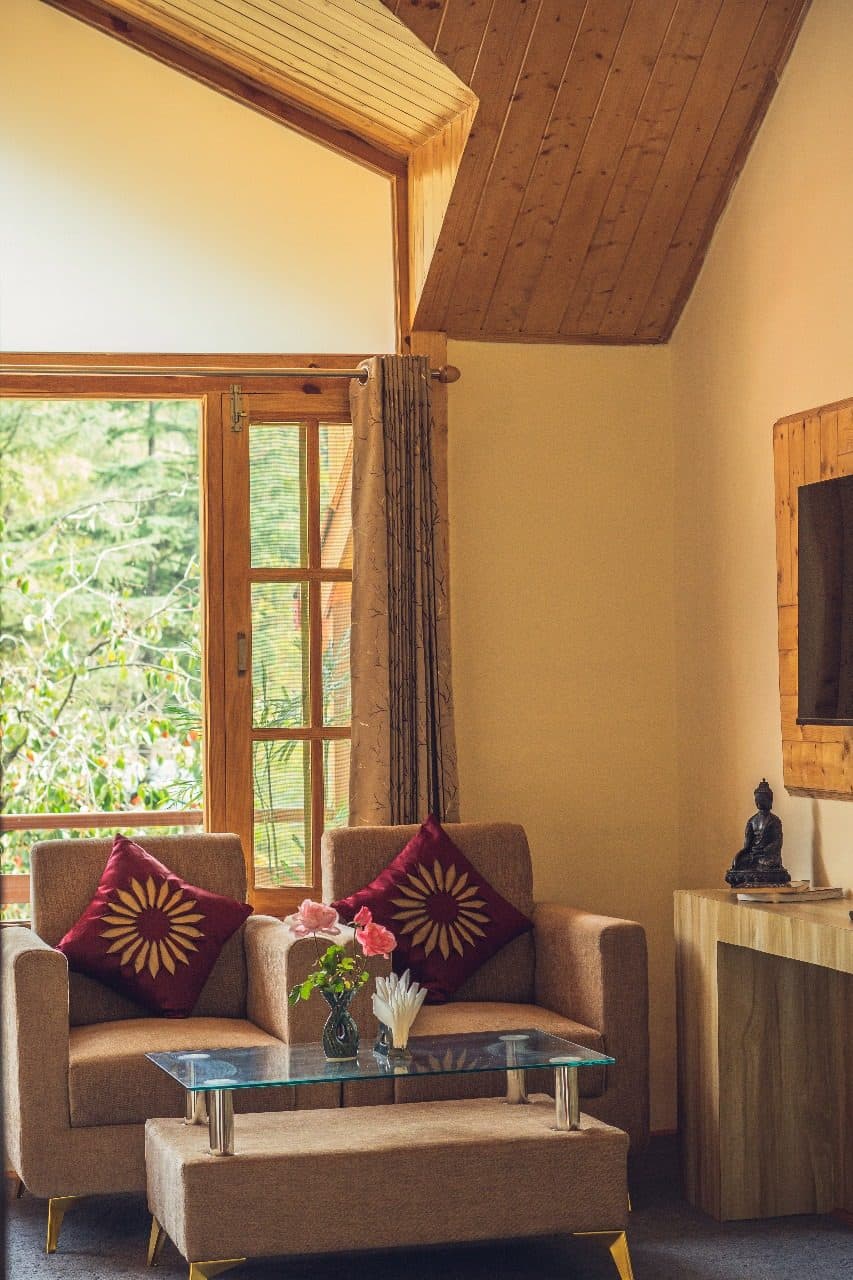
In Manali's monsoon (July–August), stay low and stay close: skip Rohtang, Hampta and any high-altitude trek, and fill your days with village walks, riverside cafes, temples, and slow food. Rain here comes in bands, not all day. Watch the Beas level, keep plans flexible, and you'll have a fine, safe trip.
We planted our first apple saplings in 2021, and we've now sat through five monsoons from the same veranda — one at Badgran on the highway south of town, one up at Shanag toward Old Manali. So when a guest messages in July asking "is it even worth coming, everything says landslide," we can answer from what we actually see out the window, not from a weather app in another city.
The honest version: the monsoon is the season most people get wrong about Manali. It rarely rains all day. What it does is rain hard in bursts — an hour before dawn, another spell late afternoon — with long bright gaps where the valley goes an impossible, washed green. The risk isn't getting wet. The risk is the high roads and the rivers. Get that one distinction right and the whole trip changes shape.
What the monsoon actually does to the Kullu valley
The southwest monsoon reaches us by the first week of July most years and stays till around mid-September. Manali town sits at roughly 2,050 m; our Badgran home is a touch lower on the highway, Shanag a bit higher toward the snow line at around 2,150 m. None of this is high enough for the rain to become dangerous on its own. The trouble starts above you and beside you — the passes and the water.
Two things go wrong in July–August, and it's worth naming them plainly. First, the high roads. The Rohtang route and the stretch toward Atal Tunnel can shut on short notice after heavy rain, and the old Kullu–Mandi highway south of us has had genuine landslide closures in bad years — the kind that strand people for hours. Second, the Beas. The river that runs through the whole valley swells fast and brown after a night of rain, and the riverbanks that look like a nice photo spot in May are not where you want to be standing in late July.
So the rule we give every monsoon guest is simple: choose things that don't depend on a mountain pass staying open or a riverbank staying calm. There's a surprising amount left when you do.
Cafes and slow mornings — the thing the monsoon is actually good for
Old Manali in the rain is the version of Old Manali we like best. The day-trip crowd thins out, the cafes above the Manalsu bridge get quiet, and you can nurse a pot of tea for two hours while the cloud sits on the deodars across the gorge. It's about 4–5 km from our Shanag home and a short, sensible drive — no high pass involved. The lanes get slippery, so wear something with grip and don't rush the cobbles.
This is also the season to just not go anywhere some mornings. Our kitchen runs slow and warm through the monsoon on purpose. A plate of hot siddu (the steamed Himachali bread we stuff with a walnut-poppyseed filling) with ghee, a second pot of tea, the rain doing its work outside — that's a legitimate way to spend a July morning, and most guests who fight it on day one give in happily by day two.
“We tell couples this outright: the monsoon is the honeymoon season nobody books on purpose and everybody who does remembers. Empty cafes, cloud in the orchard, and you two are often the only guests at breakfast. Come for the rain, not in spite of it.”— A note from the hosts
Temples and short walks that don't need a pass
The valley's temples are all low, all reachable without touching a high road, and all better in the rain when the tour buses stay home. Hadimba Temple, tucked into the cedar forest above Manali town, is roughly 12–13 km from Badgran and a short hop from Shanag — the wet forest around the shrine is the whole point, so a light drizzle only improves it. Manu Temple in Old Manali and the Vashisht temples with their hot springs are both easy, low, monsoon-safe stops.
For walks, stay in the villages. Around our Badgran home you can wander the orchard lanes and the 14-Mile stretch off the highway; around Shanag the lawns and the tracks toward Bahang are gentle and green. Keep to made paths — the monsoon loosens hillside trails and a "short cut" through the trees is exactly how a nice walk turns into a slip. Ask us at the desk which loop is holding up; we walk them daily and we'll tell you what's muddy.
Low-risk monsoon outings we actually recommend
- Old Manali cafe morning — 4–5 km from Shanag, quiet lanes, no high pass; go slow on wet cobbles
- Hadimba and Manu temples — cedar forest and old wood, best in light rain when crowds stay away
- Vashisht hot springs — a warm soak on a cold wet day, an easy low drive from town
- Orchard and village walks around Badgran or Shanag — flat, safe, and greenest of the whole year
- Naggar Castle and the Roerich estate — a low-altitude half-day, roughly 20 km, no pass crossing
- A full day in our kitchen — bread, dham dishes, and the bonfire the moment the rain lifts
The kitchen is the plan, not the backup
We say it often because it's true: at Persimmon the food is meant to be a reason to come, not a thing you tolerate between outings. When the two of us left our IT jobs and moved up here, the stated goal was to make the food a subject people talk about in town. The monsoon is when that promise does the most work, because on a genuinely wet afternoon the kitchen becomes the day's entertainment.
We'll show you how siddu is folded and steamed. If there's a dham being cooked — the Himachali feast served on a leaf plate, rajma and madra and mash dal and a sweet rice to finish — we'll pull you in for it. This is a small family kitchen, not a hotel line, and we won't pretend otherwise: the menu is what's fresh and what the mountain gave us that week, cooked by people whose names you'll know by dinner. That's the trade, and in the rain it's a good one.
“Our one non-negotiable in monsoon: tell us at breakfast if you're staying in. A wet day with notice means we can lay on a proper dham or a slow bread session. A wet day sprung on us means a lovely lunch either way — but with warning it becomes an afternoon.”— A note from the hosts
The activities that CAN work — with a weather caveat
Not everything shuts. Solang Valley, the adventure hub about 8–9 km beyond us toward the snow line, keeps running on the dry-window days. Paragliding there is genuinely weather-dependent — operators ground flights the moment the wind or cloud turns, and they're right to. When it's flying, a short joyride runs in the region of ₹1,500–3,000 and a longer high-altitude flight can climb toward ₹3,500 or more depending on the operator and the day. Treat any price as day-of and confirm on the spot.
River rafting on the Beas near Pirdi (down toward Kullu, roughly 40 km south) is the one to be careful with. Early monsoon can still run the standard stretch, but after heavy rain the operators close it because the river is simply too high — and if an operator is running when the water is up and brown, that's your cue to walk away, not your cue to go. A standard stretch, when it runs, sits around ₹500–1,000 a head. Our travel desk checks the day's status before we ever send anyone; we'd rather cancel your rafting than send you to a river we wouldn't get into ourselves.
How we read the weather from the orchard
We don't trust a single app, and neither should you. Here's the homegrown method. First, the dawn tell: if it has rained hard through the night and is still going at 6 a.m., the high roads are a bad bet that day and we plan low. If the night rain has stopped and there's a bright edge on the eastern ridge, the morning is usually yours — go early, be back by early afternoon when the second band tends to build.
Second, the river. A quick look or a word with anyone who's crossed the Beas that morning tells you more than any forecast — brown and loud means the catchment upstream got hammered, which means no rafting and extra caution on the low riverside roads. Third, we just ask around. This is a small valley; drivers, shopkeepers and the other homestay folks share road-closure news within the hour, and our travel desk is plugged into that chatter. When you're with us, you don't have to do any of this yourself — ask at breakfast and we'll tell you honestly whether today is a go-out day or a stay-in day.
Packing and small print for a monsoon stay
Bring shoes with real grip — the single most useful thing you can pack for July here — plus a light rain shell rather than a bulky umbrella, and a dry bag or a couple of zip pouches for your phone and documents. A power bank matters because heavy spells can knock the grid; both our homes run 24×7 hot water and we keep backup going, but the wider valley can flicker. Daytime temperatures sit in a comfortable 15–25°C range, dropping cooler and damp at night, so pack one warm layer even in "summer."
On timing your drive up: leave Delhi or Chandigarh with slack in the plan. The overnight Volvo to Manali is fine in monsoon and runs in the region of ₹1,200–1,800 depending on operator and demand, but budget for a delay if there's been a closure on the Mandi stretch, and don't book a same-day onward connection out of Bhuntar or a tight return. Message us your arrival window and we'll keep an eye on the road and warn you if it's a bad night to travel.
Both our homes are pet-friendly, so if the monsoon is when you finally bring the dog along, that's welcome — just tell us at the time of booking. And because we don't take online payment, everything is a simple request-to-book conversation over WhatsApp: message us your dates, we confirm what's open, and we start reading the sky for you from the day you arrive.

Written by the family that runs Persimmon Farmstead — the two boutique hotels near Manali. We write about the valley the way we'd tell a friend at the kitchen table.
Good to know
Is July–August a bad time to visit Manali?
Not bad — different. It rarely rains all day; heavy spells come in bands with bright gaps between them. The catch is the high roads and the swollen Beas, not the rain itself. If you stay low, keep plans flexible, and skip Rohtang and high treks, a monsoon trip is quiet, green and genuinely rewarding.
What's safe to do in Manali when it's raining?
Plenty that doesn't need a mountain pass or a riverbank: Old Manali cafes, Hadimba and Manu temples, the Vashisht hot springs, flat village and orchard walks near Badgran or Shanag, and a low half-day to Naggar Castle. On the wettest afternoons, a slow session in a farm kitchen — siddu, dham, tea by the fire — is the plan, not the fallback.
Can you still do paragliding or rafting in the Manali monsoon?
Sometimes. Solang paragliding runs on dry-window days and is grounded the moment wind or cloud turns — a short flight is roughly ₹1,500–3,000. Beas rafting near Pirdi can run early monsoon but closes when the river is high and brown after heavy rain. Both are strictly day-of calls; our travel desk checks status before sending anyone.
Will roads to Manali be closed in the monsoon?
They can be, briefly. Heavy rain occasionally triggers landslides on the Kullu–Mandi highway and short closures toward Rohtang and Atal Tunnel. The overnight Volvo still runs (around ₹1,200–1,800), but build slack into your plan and avoid tight onward connections. Send us your arrival window and we'll watch the road and warn you if it's a bad night to travel.
How do you decide each morning whether it's safe to go out?
We read three things from the orchard: the dawn rain (still pouring at 6 a.m. means a low, stay-close day), the Beas (brown and loud means no rafting and care on riverside roads), and the valley chatter — drivers and neighbours share closure news within the hour. Ask us at breakfast and we'll tell you honestly if it's a go-out or stay-in day.
Tell us your dates. We'll confirm, personally.
You send a request, a real host confirms it by WhatsApp — usually within a few hours.