
Naggar Castle and the Roerich Gallery: A Calm Half-Day in Apple Country
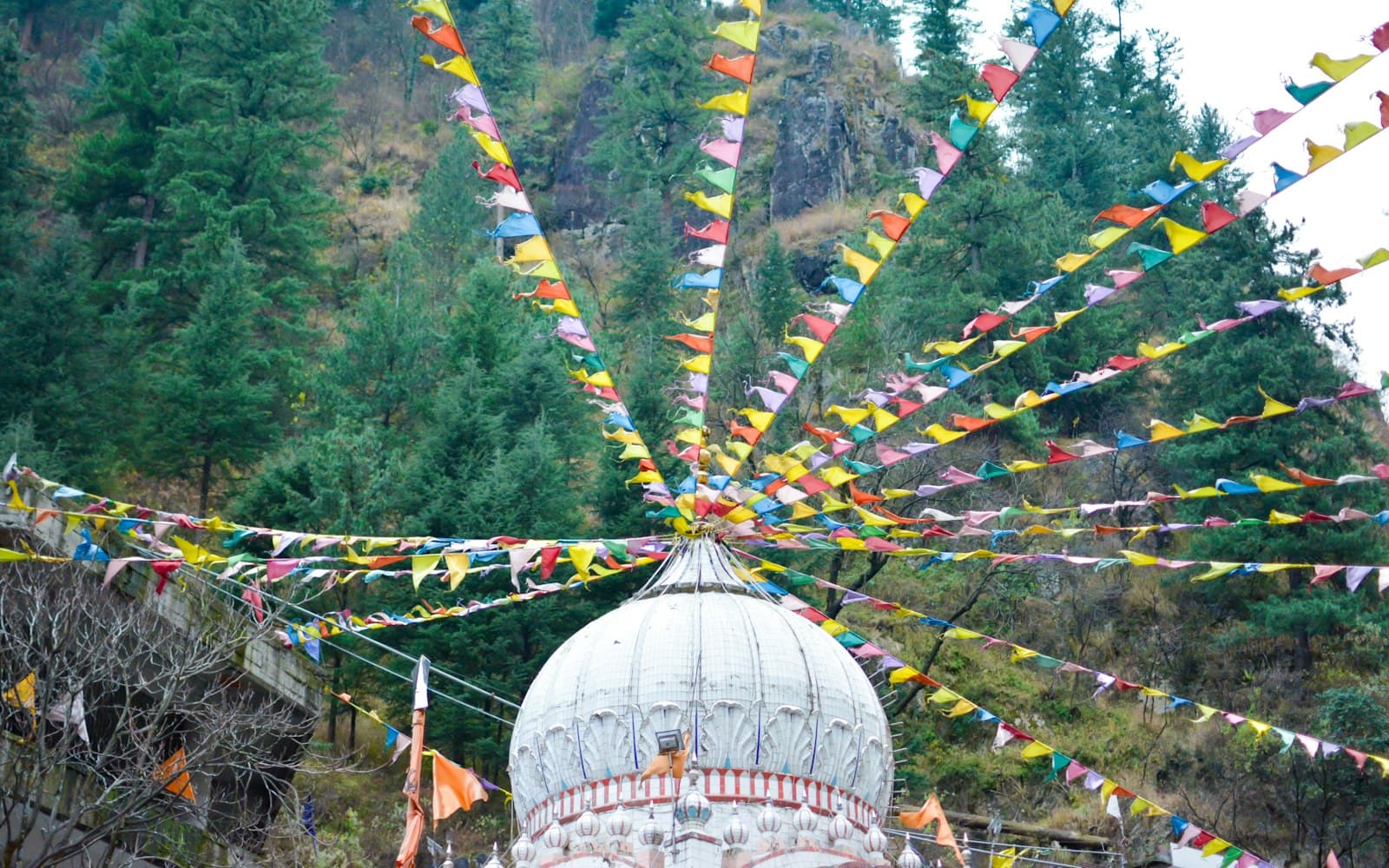
Some mornings a guest will ask us over breakfast what to do that doesn't involve the Mall Road crush or a two-hour crawl to Solang. Nine times out of ten we point them across the valley to Naggar. It's about 8 km from our Badgran house, roughly a 20-minute drive on the left bank of the Beas, and it holds two things that reward a slow half-day: a 500-year-old timber-and-stone castle, and the estate where the Russian painter Nicholas Roerich spent the last two decades of his life. Neither is crowded the way Manali town is. Both sit at the edge of proper apple country, which is reason enough to go in autumn.
Naggar was the capital of the Kullu kingdom for something like 1,400 years before the seat shifted down to Sultanpur (old Kullu town) in the 1660s. That long history is the reason so much is packed into one hillside village at around 1,760 m. You can see the castle, the gallery, a couple of stone temples and still be back with us for a late lunch. This is our honest walkthrough of how to do it well, what things cost, and when not to bother.
Getting there from the farmstead
From our Badgran house at 14 Mile, you cross the Beas and climb the left-bank road that runs through Patlikuhl and up to Naggar. It's short in kilometres but the last stretch is a narrow village climb with a few tight bends, so give it 20–25 minutes rather than assuming it's ten. A one-way taxi from our side runs roughly ₹500–700 depending on the season and how hard you haggle; a half-day round trip with a couple of hours' waiting is usually in the ₹1,200–1,800 band. We're happy to arrange a driver we trust on WhatsApp the evening before.
If you're the self-drive sort, the road is fine for any hatchback in dry weather. The one caution: parking at the top, right below the castle, is limited to a small yard, and on a summer weekend it fills by 11 am. Go early or be ready to park a little down the hill and walk up five minutes.
Coming from our Shanag house near Bahang, north of Manali, it's a longer run — you're effectively driving the length of Manali town and out the other side, so budget 45–55 minutes and expect the town-centre bottleneck near the bus stand in peak months. For Shanag guests we usually suggest pairing Naggar with a stop somewhere along the way rather than treating it as a quick dash.
The castle: older than it looks, and free to wander
Naggar Castle was built around 1460 by Raja Sidh Singh, and it's a genuine example of the Himachali kath-kuni style — alternating courses of dressed stone and cedar (deodar) beams, no cement, engineered to flex rather than crack in an earthquake. Local lore says stones were hauled up from the old fort at Karpani across the river; whether or not that's literally true, the masonry is the real draw. Stand in the central courtyard and look at how the timber and stone interlock. It has survived several serious quakes, including the big 1905 Kangra earthquake, which is the whole point of building that way.
The HPTDC (the state tourism corporation) runs the castle now, partly as a heritage hotel with a handful of rooms and a restaurant on the terrace, and partly as a monument you can walk through. Entry to look around is nominal — a few tens of rupees per person, last we checked around ₹30–50 for Indian visitors, a bit more for foreign nationals. Tucked inside is the small Jagti Patt temple, built around a slab of stone that, by tradition, represents the gods of the valley assembling; and a modest gallery of old photographs and Pahari artefacts.
Our honest steer: the castle is worth an hour, not three. The magic is the setting — the terrace looks straight across the valley to the snow line on the far ridge — and the construction, rather than any grand furnished interiors. Have a chai or a plate of something on the HPTDC terrace, walk the courtyard, find the little temple, and move on. It's one of the few places near Manali where you can sit with a view and not be surrounded by a hundred other phones.
“We tell guests: don't go to Naggar for a museum experience. Go for the light in the late afternoon, when the far ridge turns pink and the castle terrace empties out. That half-hour is the whole reason we keep sending people up.”— Your hosts at Persimmon
The Roerich estate and gallery
About 2 km up the hill from the castle, in the hamlet of Naggar proper, is the estate of Nicholas Roerich — the Russian painter, writer and mystic who settled here in 1928 and lived until 1947. If the name is new to you, the short version: he was a serious artist obsessed with the Himalaya, painted them in fierce, almost unreal blues and violets, and produced hundreds of canvases of these exact ridgelines. Seeing his paintings and then looking up at the real thing out the window is the quiet pleasure of the visit.
The estate has a few parts. The lower house is the family home, kept much as it was, with Roerich's furniture, books and some original paintings. Above it is the Urusvati Himalayan Research Institute, which he and his wife Helena founded in 1928 — now a small museum of folk art, minerals, and artefacts from their Central Asian expeditions. Roerich's samadhi (memorial) sits on the grounds under the deodars, a plain stone with an inscription, and it's a genuinely peaceful spot to stand for a minute.
Practical notes we give guests:
- Entry is modest — around ₹50 for Indian visitors and higher for foreign nationals; there's usually a separate small camera fee, so carry cash as card machines are unreliable here.
- It's closed on Mondays. This trips people up constantly — if your one free day is a Monday, go to the castle and skip the gallery, or reorder your week.
- Opening hours run roughly 9 am to 5 pm, often with a lunch break around 1–1:30 pm when the ticket window shuts. Aim to arrive by late morning or after 2 pm.
- The walk up from the car park to the houses is on a stone path with steps and a real gradient. It's short but it's uphill at 1,800 m — take it slowly if you're not acclimatised.
- Allow 60–90 minutes to do both the lower house and the Urusvati institute without rushing.
There's also a small art gallery on the estate showing work by Roerich's son Svetoslav and rotating local exhibitions, plus a café that comes and goes seasonally. Don't count on the café for lunch; it's better to plan food around the castle terrace or back at the farmstead.
Jana Falls and a longer version of the day
If you've got more than a half-day, Jana Falls extends the trip nicely. It's a further 12 km or so up the mountain road above Naggar, climbing to around 2,400 m through deodar forest and apple orchards. The drive takes 30–40 minutes each way because it's slow, winding single-track in places, and the last kilometre to the falls is a short walk from where the vehicles stop.
The falls themselves are pleasant rather than spectacular — a modest cascade — but the reason people love Jana is the cluster of wooden dhabas at the top serving Himachali food: siddu (the steamed stuffed bread), rajma-chawal, trout when it's available, all eaten on charpais under the trees. A full meal for two here typically runs ₹500–800. It's touristy in a homely way, and in peak summer weekends it does get busy with day-trippers from Manali, so an early start helps.
One honest caution: the Jana road is not fun after heavy rain or in the shoulder months when there can be ice on the shaded upper stretches. If the weather's turned, keep Jana for another day and just do the castle and gallery lower down, which stay accessible far longer into the year.
When to go — the month-by-month truth
This is apple country, and the calendar here really is written by the orchards. What you'll see and feel changes sharply through the year, so here's how we brief guests.
April to June — blossom into early summer
Late April and early May bring apple and pear blossom across the Naggar slopes — the hillsides go white and pink, and it's arguably the prettiest window of the year. Daytime temperatures sit around 18–25°C, comfortable for walking, though mornings can still be 6–8°C. June warms up and gets busier as the plains empty out for the hills; expect more traffic on the Patlikuhl road and fuller car parks by mid-morning.
July to September — monsoon and harvest
The monsoon (roughly July to mid-September) brings green, dramatic cloud and the risk of the odd landslide closing the left-bank road for a few hours. If you visit in this window, keep plans flexible and check with us before setting out. The payoff comes late: from mid-September into October the apple harvest is in full swing, the orchards are heavy with fruit, roadside crates are everywhere, and the whole valley smells of apples. It's our favourite time to send people to Naggar.
October to November — the clear window
For clarity of air and mountain views, this is the best stretch. Skies are washed clean after the rains, the far peaks are sharp, and daytime temperatures of 12–20°C are ideal for the castle terrace. Nights drop toward 3–7°C, so carry a layer for the late-afternoon light.
December to March — cold, quiet, sometimes iced
Winter is beautiful and empty. You may get snow on the Naggar slopes in January and February, daytime highs of 4–10°C, and nights below freezing. The caution is ice: the orchard road and the shaded village climbs ice over from about mid-December, and the higher Jana road is often not worth attempting. The castle and gallery still make a lovely cold-weather outing if the roads are clear — just go mid-day when any overnight ice has softened, and don't plan on the falls.
How to actually spend the half-day
The version we most often recommend: leave the farmstead mid-morning after a proper breakfast, drive up and do the Roerich estate first while the light is soft and before the ticket window's lunch break. Come down to the castle for a chai and a wander on the terrace around noon. If you've energy and the weather's kind, push up to Jana for a late lunch of siddu and trout; otherwise head back to us and eat in the orchard. The whole thing is unhurried, mostly downhill in effort, and it puts you back home well before dark — which matters, because the left-bank road has no lighting and a few blind bends you don't want to meet at night.
Bring cash, a light layer even in summer, and shoes you can climb steps in. Skip it on a Monday if the gallery is your main reason to go. And if you're travelling with a dog, the outdoor parts — castle courtyard, gallery grounds, Jana dhabas — are generally relaxed about a well-behaved pet on a lead, though the museum interiors aren't. Ask us and we'll tell you the current lie of the land.

Written by the family that runs Persimmon Farmstead — the two boutique hotels near Manali. We write about the valley the way we'd tell a friend at the kitchen table.
Good to know
How far is Naggar Castle from Persimmon Farmstead, and how do I get there?
It's about 8 km from our Badgran house at 14 Mile — cross the Beas and take the left-bank road through Patlikuhl, roughly a 20–25 minute drive (the last stretch is a narrow village climb). A one-way taxi is around ₹500–700; a half-day round trip with waiting time runs about ₹1,200–1,800. From our Shanag house near Bahang it's longer, 45–55 minutes through Manali town. We can arrange a trusted driver on WhatsApp the night before.
Is the Roerich gallery open every day?
No — it's closed on Mondays, which catches a lot of visitors out. Hours are roughly 9 am to 5 pm, often with the ticket window shut for lunch around 1–1:30 pm. Entry is modest (around ₹50 for Indian visitors, more for foreign nationals) plus a small camera fee, so carry cash. If your only free day is a Monday, do the castle instead, which stays open.
Is Naggar worth it in winter, or does the road get blocked?
The castle and gallery are a lovely cold-weather outing when roads are clear, with snow on the slopes in January–February and daytime highs of 4–10°C. The caution is ice — the village climbs and our orchard road ice over from about mid-December, so go mid-day once any overnight ice has softened. The higher Jana Falls road is often not worth attempting in deep winter; keep that for the warmer months.
Can I combine Naggar with Jana Falls in one day?
Yes, if you're not in a rush. Jana is about 12 km further up above Naggar, at around 2,400 m, a 30–40 minute climb on winding single-track. The falls are modest but the wooden dhabas serve excellent siddu, rajma-chawal and trout — a meal for two is roughly ₹500–800. Start early to beat weekend day-trippers, and skip it after heavy rain or when the upper road may be iced.
Tell us your dates. We'll confirm, personally.
You send a request, a real host confirms it by WhatsApp — usually within a few hours.