
Our Farm Kitchen's Story
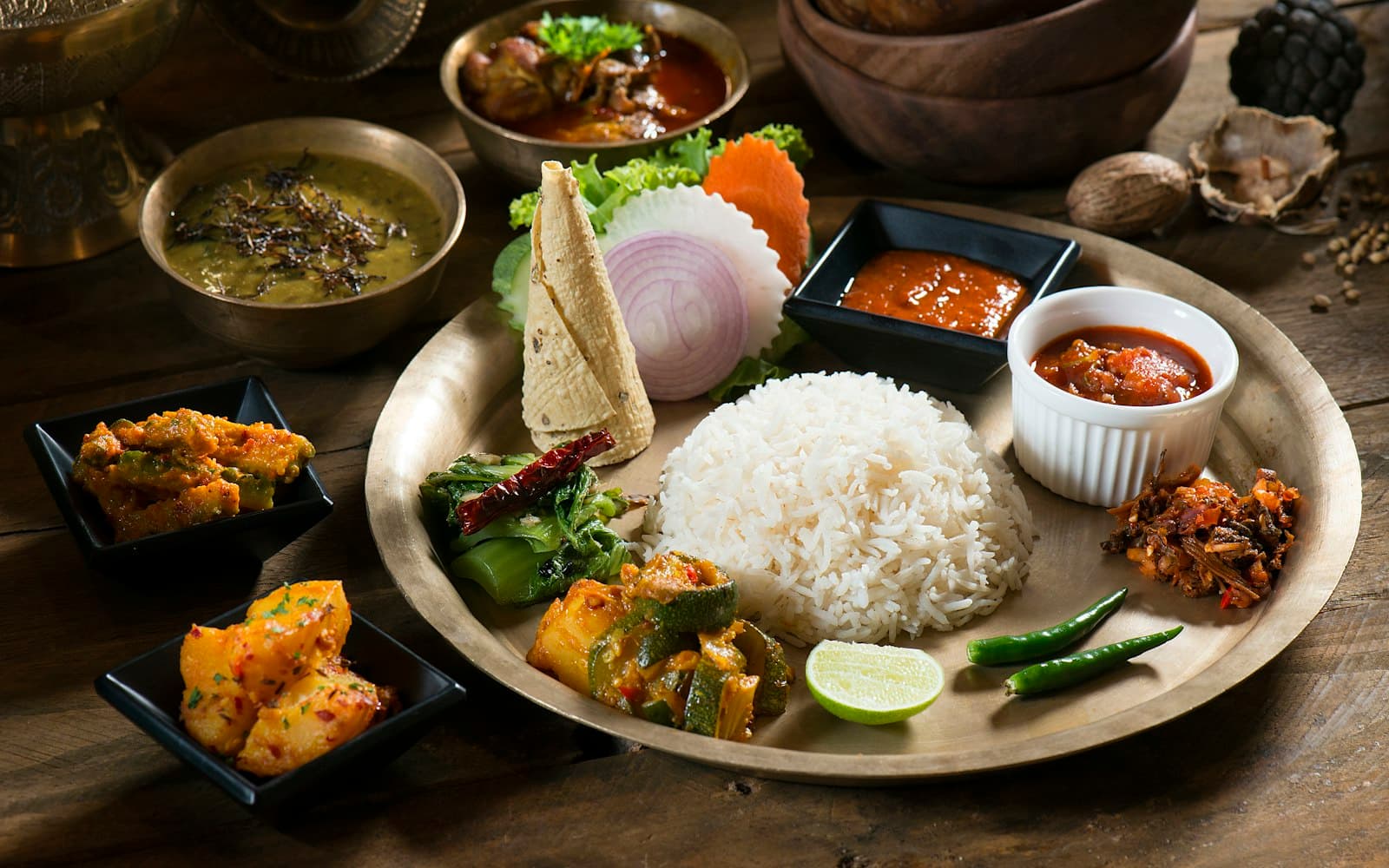
Our farm kitchen is a small family kitchen at Persimmon Farmstead, near Manali, where the two of us — the founder-hosts — cook home-style Himachali and North Indian food using orchard produce and local mandi vegetables. We serve set thalis rather than a long menu, and our most-requested dishes are rajma-chawal, siddu, and a slow-cooked madra.
We should say this plainly before anything else: this is not a hotel kitchen. There is no long à la carte card, no chef in whites, no pass with ten burners going at once. It is a family kitchen — the kind you'd find in any Kullu valley home — and most nights one of us is standing at the stove while the other is on WhatsApp confirming tomorrow's bookings. We decided early that we'd rather do a short list of dishes properly than a long one badly. Nearly everything guests say about the food in their reviews comes back to that one decision.
Why we bet the whole place on food
We met in corporate life — long years in IT, the two of us — and like a lot of people who spent 2020 staring at a screen indoors, we came out of the lockdowns wanting a different shape of day. We settled in the Kullu valley in 2021. When we sat down to plan what Persimmon would actually be, we kept circling one idea. Manali has no shortage of places to sleep. What it's short on is a place where the food is the point. So we said it out loud, half as a joke and half as a vow: we wanted the food at Persimmon Farmstead to become a subject people spoke about in the town.
That sounds grand written down. In practice it meant boring, unglamorous choices. It meant buying vegetables three times a week from the Kullu mandi, about 25 km down the valley from our Badgran flagship, instead of stocking a freezer. It meant learning to make dishes the way the aunties in the village make them, not the way a hotel banquet does. And it meant being willing to serve someone the exact same rajma two evenings running because that's what they asked for.
“The first winter, a guest from Chandigarh finished his dinner, sat quiet for a minute, and said the dal tasted like his mother's. We didn't sleep much that season, but that one line is roughly why we do this.”— A note from the hosts
What a 'dham' is, and why it shaped our table
If you've been to a Himachali wedding or a village function, you've eaten a dham — the traditional feast of the hills, cooked by a hereditary caste of cooks called botis, served on the floor on leaf plates, eaten in slow rounds. A proper dham is a full-day affair with dishes like madra (a yoghurt-and-chana gravy, gently spiced, almost never chilli-hot), khatta (a sweet-sour tamarind or aamchur preparation), rajma, rice, and a sweet mittha of rice and dry fruit to finish.
We don't claim to cook a real dham — that's a craft that belongs to the botis and takes a lifetime. But the dham taught us the grammar of hill food: yoghurt instead of cream, slow instead of fast, warm spice instead of aggressive heat, and a plate that's balanced rather than showy. Our set thalis borrow that grammar. When the day is cold and the orchard road has iced over, a madra-based thali does more for a tired traveller than anything off a fusion menu ever could.
The dham-inspired dishes we cook
- Madra — chickpeas simmered in whisked yoghurt with clove, cardamom and cinnamon; mild, comforting, the dish we most often convert sceptics with.
- Siddu — a steamed wheat bun, sometimes stuffed with a walnut-and-poppy-seed paste, served with ghee or a coriander-mint chutney. A winter favourite; it takes hours to prove, so we make it on request.
- Rajma-chawal — the Kullu rajma is a small, dense bean with real flavour; this is the single most-requested plate in the house.
- Seasonal saag and local greens — whatever the mandi and our own patch are giving that week.
- Kadhi and simple dals — the everyday backbone, cooked slow, the way home does it.
From our orchard and the valley around it
Persimmon is named for a fruit, and we do have persimmon trees, along with the apples that the Kullu valley is really known for. Come the September–October harvest, apples come off the trees around both our homes — the Badgran flagship down the valley, and Persimmon Farmstead Shanag, higher up toward Old Manali and the snow line. We're not going to pretend we're a self-sufficient farm; we're not. But what's in season genuinely shapes what's on the plate. Apple season means apple in the kitchen — stewed, in a chutney, in a simple dessert. Plums and apricots earlier in the summer do the same.
What we don't grow, we buy close by. Vegetables from Kullu mandi. Trout, when we can get it fresh, from the farms down the Beas — Kullu valley trout is a real local thing and worth trying if it's on that day. Rajma and r.ce and the pantry staples from the same shops the whole village uses. The result isn't fancy. It's honest, and it tastes of where you are, which to us was always the whole point of driving fourteen kilometres out of Manali town to stay in an orchard.
The two kitchens, and how they differ
We cook the same food philosophy at both homes, but the settings are different and that changes the meal a little. At the flagship at Badgran / 14 Mile — about 14 km south of Manali town, a minute off the Kullu–Manali highway, opposite Span Resort — the rooms catch the morning sun, and breakfast on a clear day is eaten with the valley waking up in front of you. It's the easier of the two to reach if you're driving up tired from Delhi or Chandigarh.
At Persimmon Farmstead Shanag, near Bahang and about 4–5 km north of Manali toward Old Manali and Solang, the wooden chalets and stone cottages sit on open orchard lawns, higher up and closer to the snow. In deep winter the kitchen there leans harder into the warming dishes — more siddu, more madra, more of the things you want when there's frost on the lawn. Same hands, same idea; the altitude just nudges the menu.
The dishes guests ask for by name
After a few seasons you learn which plates people remember. Three come up again and again when guests message us before they even arrive. Rajma-chawal is the runaway one — couples who stayed a year ago will ask if 'that rajma' is still on. Siddu is the winter request; people who've had it once in the hills go looking for it. And the madra quietly wins over the guests who arrive worried that hill food will be too plain or too fiery, and leave asking how we make it.
Because the kitchen is small and it's the two of us and our small team, we ask one favour: tell us at check-in, or on WhatsApp before you come, if there's something you're hoping for. Siddu needs hours of proving. A specific thali is easy if we know by morning. Turn up at nine at night expecting a fifteen-item menu and we'll gently disappoint you — but ask ahead, and we'll usually make the thing you drove up for. That back-and-forth, the owner personally sorting out your dinner, is not a bug in how we run the place. It's the whole design.
“We'd rather cook you one plate you'll talk about for a year than twelve you'll forget by the drive home. That's the trade, and we're at peace with it.”— A note from the hosts
Eating with us: a few honest notes
- Meals are best as set thalis; there's no big menu, and that's on purpose.
- Tell us your preferences ahead — veg/non-veg, spice level, siddu, or anything special — ideally the morning of, on WhatsApp.
- Food is milder than restaurant fare by default; ask and we'll add heat. Hill food leans warm-spiced, not chilli-hot.
- Both homes are pet-friendly and the food travels well to the bonfire if you'd rather eat outside on a clear night.
- We can't do large banquet volumes at short notice — for groups, message us first so we can plan the kitchen properly.
None of this is fine dining, and we've never once called it that. It's a family kitchen in an orchard, cooking the food of this valley for people who've come a long way to sit in the mountains and eat something real. When a guest tells us, quietly, that the dal tasted like home — that's the whole ambition, arriving at the table one plate at a time. If you're planning a stay and want a particular dish waiting, just send us a message. We'll have the pot on.

Written by the family that runs Persimmon Farmstead — the two boutique hotels near Manali. We write about the valley the way we'd tell a friend at the kitchen table.
Good to know
Does Persimmon Farmstead have a restaurant or a set menu?
We run a small in-house family kitchen at both homes, not a full à la carte restaurant. We serve home-style Himachali and North Indian set thalis rather than a long menu. Tell us your preferences — veg or non-veg, spice level, any special dish — at check-in or on WhatsApp beforehand, and we'll cook to that.
What are the most popular dishes at Persimmon Farmstead?
Three dishes get requested by name again and again: rajma-chawal made with the small, flavourful Kullu bean; siddu, a steamed stuffed wheat bun that's a winter favourite; and madra, chickpeas simmered slowly in spiced yoghurt. All three are home-style, mildly spiced by default, and easy to arrange if you ask ahead.
Can you cook for dietary needs or make food less spicy?
Yes. Our hill food is mild by default — warm-spiced rather than chilli-hot — and we can adjust heat up or down on request. We handle vegetarian and non-vegetarian preferences and common needs easily. Because the kitchen is small, please tell us in advance, ideally the morning of your meal over WhatsApp, so we can plan for it.
Is the food sourced from your own farm?
Partly. We have apple and persimmon trees at both homes, and seasonal fruit like apples in September–October genuinely shapes the plate. What we don't grow we buy close by — vegetables from the Kullu mandi about 25 km down the valley, and fresh Beas-valley trout when available. It's honest local food, not a fully self-sufficient farm.
Do I need to order meals in advance?
For everyday thalis, usually no — but for anything special like siddu, which needs hours to prove, or for larger groups, please message us ahead on WhatsApp. The kitchen is run by the two of us and a small team, so a little notice means we can make exactly the dish you came for rather than turning you away late at night.
Tell us your dates. We'll confirm, personally.
You send a request, a real host confirms it by WhatsApp — usually within a few hours.