
What Grows in the Kullu Valley, by Month
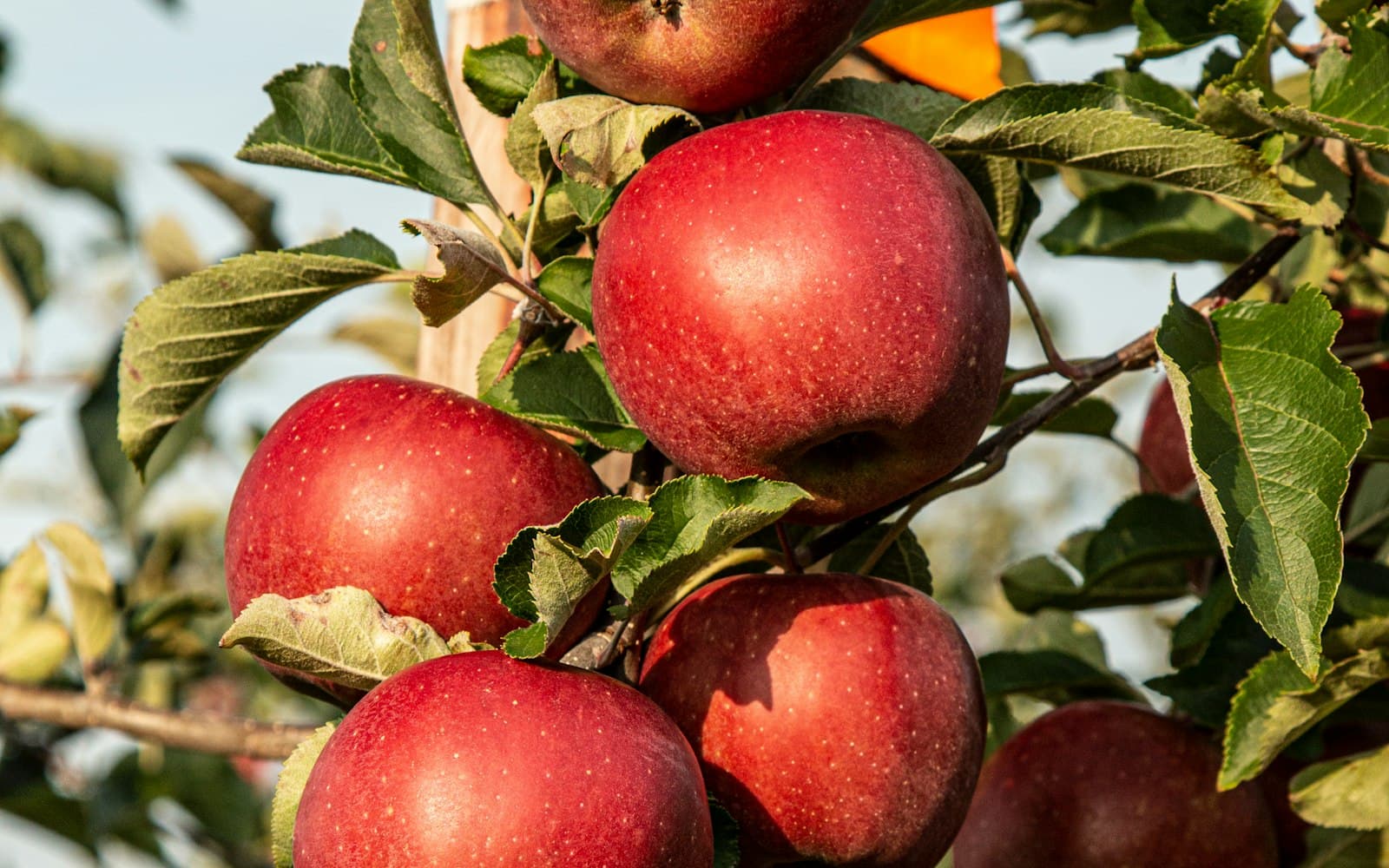
In the Kullu valley near Manali the harvest runs roughly like this: cherries and apricots in late May and June, plums and the first pears through July and August, apples from September into October, and walnuts, rajma and stone-ground grains through autumn. Winter is a larder of stored apples, sun-dried greens and pickles. Our two farm kitchens cook to that calendar.
We planted a fair bit of what we cook, and we buy the rest within a few kilometres of the two houses — one at Badgran, about 14 km south of Manali town on the Kullu highway, and the other at Shanag, four or five km north toward Solang. The two sit at different heights, so the same fruit ripens a week or two apart between them. That gap is small, but if you cook every day it's the whole story of the season. This is what the valley actually gives us, month by month, and what we do with it.
Why the valley eats by the calendar
The Kullu valley floor runs from roughly 1,200 metres at Bhuntar up past 2,000 metres above Manali, and the orchards climb the slopes on both sides. Apples want cold winter hours and a long, bright ripening — the valley has both, which is why Himachal apples travel across the country while so little else does. What that altitude also means, practically, is a short intense growing window. Nothing is available year-round here the way it is in a Delhi market. You eat a thing for three or four weeks and then it is gone until next year.
That shapes a small family kitchen more than any recipe does. We are two founders who left IT jobs and came here in 2021, and the fastest thing we learned is that you cook what the week hands you or you cook badly. Our menu is short on purpose. When the apricots come in we put apricots on the table. When they finish we stop.
Spring — March, April, May: greens before the fruit
Spring is thin on fruit and rich in green. As the snow pulls back off the lower slopes, the wild and semi-wild greens come up first: lingri, the fiddlehead fern that grows along the stream cuts, and the tender tops of local mustard and spinach that overwintered. Lingri is the one worth waiting for — foraged for a few short weeks, cleaned of its curl, and cooked simply or turned into a sharp pickle that carries through the year.
By late April the orchards are in blossom, which is a spectacle and a warning both. A hailstorm in blossom week can take out a season's apples in twenty minutes, and every grower in the valley watches the sky. Nothing is on the table yet from the trees, but this is when the year is decided. In May the first cherries begin to colour at the lower Badgran height while Shanag, higher up, is still a couple of weeks behind.
Early summer — June: cherries and apricots
June is the sweetest short month. Cherries ripen dark red on the lower trees and we eat far too many straight off the branch before any reach a bowl. Apricots follow close behind — the small tart hill apricots, not the big soft commercial kind, best eaten warm from the sun. This is also walnut country in the long game: the trees flower now and set the green nuts that we won't crack until autumn.
What lands on our table in June, beyond the fruit itself:
- Fresh apricots with the morning chai, and a slow apricot compote for the ones that bruise
- Cherry on everything we can justify — over curd, into a loose jam
- Apricot kernels (giri) cracked and saved — the bitter-sweet inner seed used in local sweets
- The first cucumbers and summer greens from the kitchen patch
“We tell guests plainly: if you come in the third week of June, ask for cherries and don't ask in July — they'll be finished, and we'd rather say so than serve you something flown in. A short season honestly served beats a long one faked.”— A note from the hosts
High summer — July, August: plums, pears and the monsoon table
The monsoon reaches the valley through July, softer here than in the plains but enough to green everything and swell the rivers. Plums come in now — the local plums are small, tart and wonderful stewed — along with the first pears and the early apple varieties on warmer aspects. The kitchen patch is at its most generous: beans, gourds, tomatoes, and the greens that love the wet.
This is also rajma season in the making. The Kullu red kidney bean — properly the small, thin-skinned hill rajma, not the fat commercial bean — is sown in the summer fields terraced up the slopes and will be harvested from around September. It is the single ingredient we're least willing to compromise on. Cooked slow with little more than onion, tomato, ginger and time, a plate of genuine Kullu rajma-chawal is the dish guests remember, and it's a monsoon-to-autumn staple on both our tables.
Autumn — September, October: apple harvest, walnuts, rajma
This is the valley's loudest month. From September the apple harvest is on in earnest — the whole Kullu-Manali stretch fills with wooden crates, trucks queue on the highway, and the orchard roads smell of fruit and diesel in equal measure. Royal Delicious and the older Red varieties come off the trees, and where growers have shifted to newer high-colour strains those come too. The fruit that doesn't make the export crate — the small ones, the marked ones — is the best eating, and it's what fills our kitchen.
Walnuts drop through October; you gather them, stain your hands green pulling off the husk, and lay them out to dry. Rajma comes off the fields and is dried on rooftops and tarpaulins across the villages. Persimmon — the fruit we're named for — colours orange on bare branches as the leaves fall, hanging on after everything else has finished. Autumn is when the larder gets stocked for the cold months, and the smell of the season is apples and woodsmoke together.
What the apple glut becomes
We can't eat a harvest, so we preserve it. The seconds and windfalls go three ways in our kitchen, and this is roughly the split:
- Stewed and spiced apple for breakfast, warm off the bonfire coals on cold mornings
- A slow apple jam and apple chutney that carry through winter
- Fresh-pressed juice while the fruit lasts, and apples stored cool for the months when nothing's ripening
Winter — November to February: the larder and the snow
By December the orchard road ices over and the higher house at Shanag sits closer to the snow line than Badgran does. Nothing new ripens now, and that's the point of everything we did in autumn. Winter cooking here is larder cooking: stored apples, dried walnuts cracked by the fire, sun-dried greens rehydrated into thick winter saag, and pickles that started life as summer fruit. Grains come into their own — stone-ground wheat and the local red rice, and the buckwheat and barley that grow high up where apples won't.
This is siddu season too. Siddu is the steamed stuffed bread of these valleys — a slow-risen wheat dough stuffed with a walnut-and-poppy or spiced-lentil filling, steamed and eaten hot with ghee or a chutney of the winter greens. It's cold-weather food, filling and warm, and it belongs to the months when the fields are under snow and the kitchen leans on what it stored. Dham, the festive sit-down meal cooked by the traditional botis, threads through the year's weddings and festivals but feels most at home in the winter run of celebrations.
“Winter is when a farm kitchen shows what it saved. There's no fresh fruit to hide behind — so what's on the plate is last September's apples and the greens we dried in the sun, and honestly that's the food we're proudest of.”— A note from the hosts
A quick month-by-month reference
If you're planning a trip around what's ripe, here's the short version for the Kullu valley near Manali. Heights shift these by a week or two — the lower Badgran orchards run a little ahead of Shanag.
- March–May: wild greens, lingri fern, mustard and spinach tops; orchards in blossom
- June: cherries, hill apricots; walnuts setting on the tree
- July–August: plums, early pears, first apples; monsoon greens, beans, gourds; rajma growing
- September–October: apple harvest, walnuts drying, rajma off the fields, persimmon colouring
- November–February: stored apples, dried walnuts, winter saag, siddu, local grains and rice
None of this is a promise of a fixed menu — a small kitchen and a mountain season don't work that way. It's a promise that whatever we put in front of you at Badgran or Shanag came off the valley in the weeks around your stay, and that if we can't do a thing well right now we'll tell you and cook you something we can. That's the whole idea of eating in an orchard: you get the valley on a plate, in its own time.
Message us before you come and we'll tell you honestly what's ripe the week of your stay — cherries in June, apples and walnuts in autumn, siddu and the winter larder when the snow's down. It's the best way to plan a meal here, and it's a two-minute chat on WhatsApp.

Written by the family that runs Persimmon Farmstead — the two boutique hotels near Manali. We write about the valley the way we'd tell a friend at the kitchen table.
Good to know
When is apple season in the Kullu valley near Manali?
The main apple harvest runs from September into October across the Kullu-Manali stretch, when trucks and wooden crates fill the highway. Early varieties on warm slopes can start in August. Lower orchards near Badgran ripen a week or two ahead of higher ones toward Shanag and Solang, so the exact window shifts with altitude.
What fruits grow around Manali besides apples?
Plenty. Cherries and hill apricots come in June, plums and early pears through July and August, and walnuts drop in October. Persimmon colours on bare branches into autumn. Apples are the famous export crop, but the valley's June cherries and tart hill apricots are what locals wait for each year.
What is Kullu rajma and why is it special?
Kullu rajma is a small, thin-skinned red kidney bean grown on the valley's terraced hill fields, sown in summer and harvested from around September. It cooks softer and tastes deeper than the large commercial bean. A plate of slow-cooked Kullu rajma with local rice is one of the region's signature home meals, and a staple on our tables.
What local food do you serve in winter when nothing is ripening?
Winter is larder cooking. We serve stored apples stewed for breakfast, dried walnuts, sun-dried greens rehydrated into thick saag, and siddu — the steamed stuffed hill bread eaten hot with ghee. Local stone-ground grains and red rice come into their own. It's food built from what the orchard saved in autumn.
Can I plan a stay around a particular harvest?
Yes, and it's worth it. For cherries and apricots come in June; for the apple harvest and walnuts, come September to October; for siddu and winter cooking, come once the snow is down. Message us on WhatsApp before booking and we'll tell you honestly what's ripe the week of your stay.
Tell us your dates. We'll confirm, personally.
You send a request, a real host confirms it by WhatsApp — usually within a few hours.